
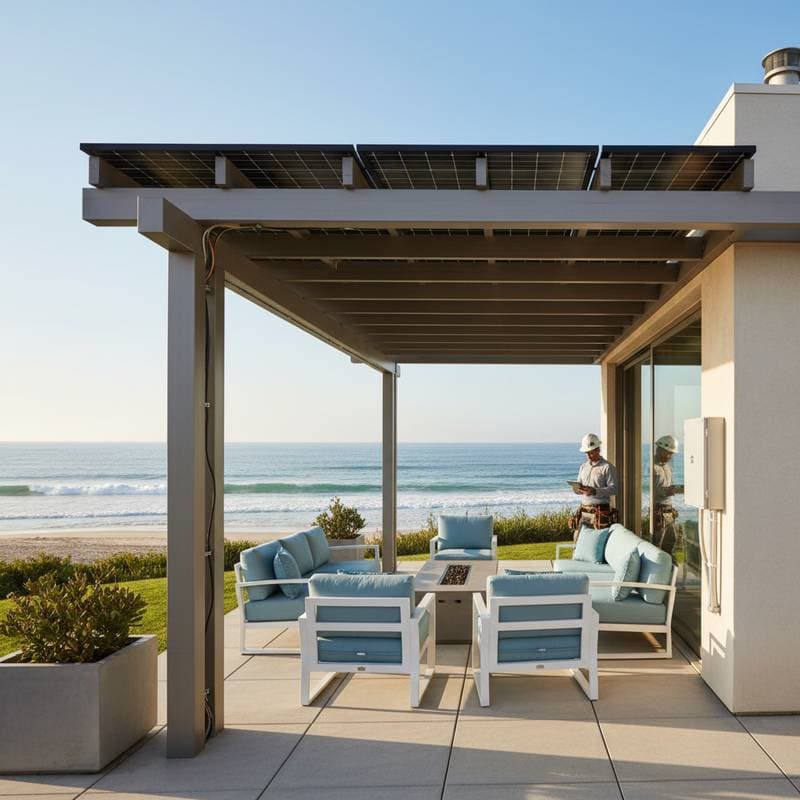
Solar Pergolas: Shade and Power for Coastal Homes
Imagine relaxing on your patio as an ocean breeze flows through, with sunlight passing gently through integrated solar panels overhead. Cool shade replaces intense heat, and your home generates renewable energy in the background. This scenario captures the appeal of a solar pergola, an outdoor structure that merges comfort, aesthetics, and sustainability.
A solar pergola integrates solar panels into the open-beam framework of a traditional pergola to produce electricity. Homeowners in coastal areas find this design particularly valuable, as it provides protection from intense sunlight, resists salt-laden air, and supports clean energy production. The result extends usable outdoor space while reducing reliance on grid power.
Installation costs for solar pergolas typically range from $12,000 to $28,000, with an average of $18,000 for a medium-sized unit. Factors such as size, materials, and electrical setup influence the final price. This upfront investment often yields returns through energy savings, improved property aesthetics, and potential increases in home value. For those avoiding self-installation, obtaining estimates from experienced professionals who focus on solar installations in coastal regions proves essential.
Factors Influencing Costs
Prices for solar pergolas vary between $12,000 and $28,000, and most installations average $18,000 for standard sizes. Material choices, labor requirements, electrical integration, and regulatory approvals all contribute to the total expense.
Key elements that drive costs include the following:
- Size and design complexity: A compact freestanding pergola equipped with four solar panels might total $12,000, whereas a larger custom version with advanced panels could surpass $25,000.
- Material selection: Pressure-treated wood offers an economical option but demands regular upkeep. Aluminum or composite alternatives carry higher initial costs yet provide superior resistance to coastal corrosion.
- Solar panel efficiency: Monocrystalline panels, which deliver higher output per square foot, command premium prices and suit spaces with limited sunlight exposure.
- Labor and installation: Hiring experts adds $3,000 to $8,000, varying with wiring demands, trenching needs, and regional wage standards.
- Permits and electrical work: Properties near the coast frequently necessitate reinforced structures and specialized wiring, adding $500 to $2,000 to the budget.
Prefabricated kits with solar-compatible frames start at $7,000 to $10,000, excluding panels and setup. Customized systems incorporating features like built-in lighting, electrical outlets, and intelligent inverters may exceed $30,000.
Freestanding Solar Pergolas
Freestanding solar pergolas rely on independent footings and position flexibly near pools, gardens, or outdoor kitchens. Owners can align them to capture optimal sunlight, regardless of the home's roof orientation.
Ideal applications: Expansive backyards or sunlit decks that benefit from dedicated shading.
Advantages:
- Flexible positioning to maximize energy capture
- Defines a separate area for outdoor activities
Disadvantages:
- Necessitates buried wiring for home integration
- Involves marginally elevated setup expenses
Photo: Joe Hendrickson / Getty Images
Installation Options: DIY or Professional
Building a solar pergola qualifies as a moderate-difficulty project for individuals skilled in woodworking and preliminary electrical tasks. The primary hurdle involves connecting to the home's electrical system, a step that requires a licensed electrician to ensure safety and adherence to regulations.
Benefits of DIY approach:
- Potential savings of $3,000 to $7,000 in labor fees
- Opportunity to personalize the design without time constraints
- Acquisition of practical knowledge in renewable energy systems
Challenges of DIY approach:
- Demand for exact structural measurements
- Strict compliance with electrical codes
- Possible restrictions on manufacturer warranties for solar components
Benefits of professional installation:
- Comprehensive service covering planning through final inspections
- Full warranties for both the framework and energy-producing elements
- Expedited process that guarantees regulatory approval
In coastal settings prone to moisture, high winds, and corrosion, professional expertise often justifies the additional expense. Specialists apply marine-grade hardware, durable sealants, and robust grounding techniques to promote enduring reliability.
Ensuring Longevity Through Maintenance
With appropriate upkeep, a solar pergola endures for 25 years or longer. The structural components last 15 to 30 years based on material quality, while solar panels maintain substantial efficiency over extended periods.
Practical maintenance strategies:
- Clean panels with fresh water bimonthly to clear salt residue and accumulated dirt.
- Examine connections and joints yearly for signs of rust or wear.
- Apply fresh finishes to wooden elements periodically to shield against environmental exposure.
- Prune overhanging foliage to prevent shading of the solar array.
Preventing corrosion remains crucial in seaside locations. Opt for stainless steel fittings and apply sealants to any exposed metals for enhanced protection.
Addressing Frequent Questions
How much electricity does a solar pergola produce?
A medium-sized pergola featuring six panels generates approximately 2,000 to 3,000 kilowatt-hours annually, contingent on regional solar availability. This output offsets a meaningful share of household electricity needs.
Is a permit required for installation?
Building and electrical permits apply in most jurisdictions. Professionals manage this process, verifying compliance with safety standards and local wind resistance criteria.
Can it supply power during grid outages?
Grid-connected systems deactivate automatically for utility safety. Adding battery storage or a hybrid inverter enables continued operation in such scenarios.
Does salt air harm the panels?
Contemporary panels incorporate corrosion-proof frames and tempered glass, but regular rinsing and applied coatings extend their service life in saline conditions.
What is the typical installation timeline?
Experienced teams finish most projects in 3 to 5 days, influenced by scale and approval schedules.
Maximizing Benefits in Your Outdoor Space
After installation, a solar pergola elevates the patio into a shaded haven that also contributes to energy independence. Daily use becomes more enjoyable with reduced heat and dependable power generation.
The structure delivers ongoing financial returns via decreased utility expenses and environmental gains through sustainable practices. Coastal residents seeking enhanced comfort and eco-conscious enhancements discover substantial value in this versatile addition.