
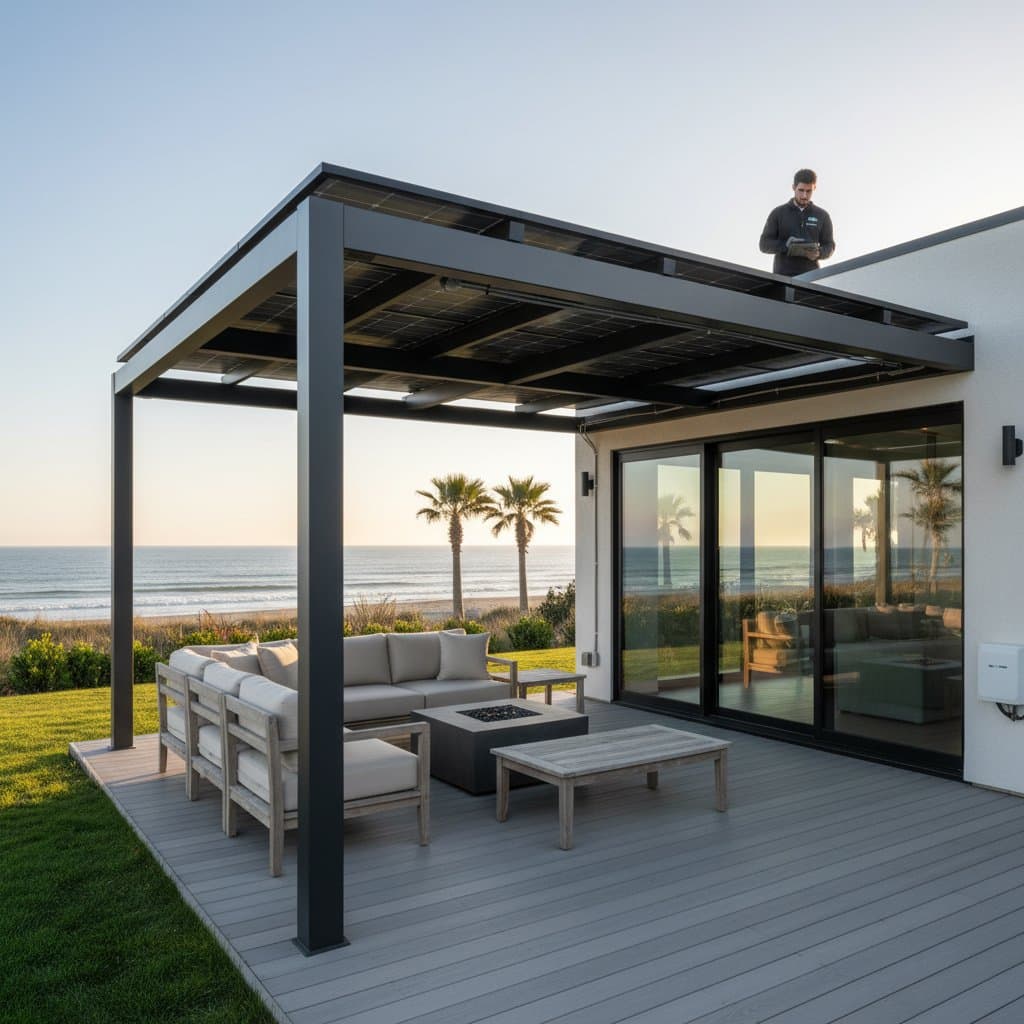
Solar Pergolas Halve Energy Costs for Coastal Homes
Imagine a backyard enveloped in gentle sunlight, with ocean breezes filtering through the openings of an elegant pergola. This structure provides shade and generates electricity to power the home. For coastal residents, solar pergolas merge outdoor enjoyment with sustainable energy production, frequently reducing electricity expenses by almost 50 percent and elevating property worth.
This guide details the mechanics of solar pergolas, their pricing, suitable designs for coastal environments, and choices between self-installation and expert services. Readers gain insights into cost-saving strategies and long-term efficiency maintenance.
Key takeaway: Solar pergolas generally range from $10,000 to $25,000, generating sufficient energy to cover 40 to 60 percent of a coastal residence's electricity demands. Obtain estimates from qualified professionals to evaluate setup possibilities and verify compliance with regional regulations.
Cost Factors
Solar pergolas typically cost between $10,000 and $25,000, influenced by dimensions, construction materials, and energy output capacity. A standard mid-sized unit, accommodating 3 to 5 kilowatts of solar panels, averages $17,000.
Primary cost factors include:
- Structure type: Ready-made aluminum assemblies begin at approximately $8,000, whereas bespoke wooden or steel constructions with built-in electrical systems and converters surpass $25,000.
- Solar capacity: Installations yielding 1 kilowatt for every 100 square feet of coverage area run about $2,000 to $4,000 per kilowatt.
- Labor and permits: Allocate $1,500 to $3,000 for certified setup, electrical integration, and regulatory inspections.
- Foundation and site preparation: Concrete slabs or pier foundations contribute $1,000 to $2,500, varying with ground stability.
In coastal areas, expenses may rise due to the need for materials that withstand salt exposure and moisture, such as powder-coated aluminum or pressure-treated lumber. Selecting marine-grade components ensures longevity against environmental challenges.
DIY Versus Professional Installation
Assembling a solar pergola demands proficiency in woodworking and electrical work. Self-assembly packages range from $8,000 to $15,000, yet demand meticulous organization and adherence to standards.
DIY considerations:
- Confirm permitting obligations with local authorities prior to commencement.
- Incorporate rust-proof connectors and proper grounding equipment.
- Engage a certified electrician for final electrical linkage and utility synchronization.
Circumstances warranting professional involvement:
Opt for experts when the project involves reinforcing the home's framework, adding battery storage, or creating tailored roofing. Professionals guarantee secure execution and preserve manufacturer warranties. They also perform essential assessments for wind resistance, critical in seaside locations where gusts can reach 50 miles per hour or more.
To illustrate, a DIY approach suits simple, flat-yard installations, but coastal properties often feature uneven terrain or elevated wind risks, making professional evaluation advisable from the outset.
Strategies to Reduce Expenses
Homeowners can lower the overall investment through targeted approaches.
- Leverage government or regional incentives. Coastal areas frequently provide solar credits that diminish costs by 20 to 30 percent; research federal tax credits alongside state programs for maximum reimbursement.
- Integrate with existing renovations. Pair the pergola with planned updates like patio resurfacing or landscape lighting to consolidate labor charges and minimize disruption.
- Select high-efficiency panels. Advanced photovoltaic modules produce more power per unit area, decreasing the quantity required and thus reducing structural support needs and expenses.
- Schedule installation in low-demand periods. Service providers often apply reductions to workforce fees during winter or rainy seasons when schedules lighten.
- Implement routine upkeep. Biannual panel cleaning maintains output levels at 95 percent efficiency and averts material degradation from salt accumulation.
These methods not only trim initial outlays but also amplify return on investment over the 25-year lifespan of most solar systems.
Frequently Asked Questions
How much power does a solar pergola generate?
A standard setup with 12 to 18 panels produces 4 to 6 kilowatts, sufficient to cover approximately half the electricity consumption of an average coastal household, which totals 8 to 10 kilowatts daily in summer months.
Is a permit required for a solar pergola?
Affirmative. Local governments mandate approvals for structural integrity and electrical safety. Seaside jurisdictions impose extra criteria for hurricane preparedness and material durability; consult the building office early to avoid delays.
Does salt air harm the panels?
Premium panels feature protective coatings designed for marine conditions, resisting corrosion effectively. Regular rinsing with fresh water removes salt deposits, preserving performance and extending operational life beyond 25 years.
What maintenance is necessary?
Inspect anchors, cables, and water runoff paths quarterly. Clean solar surfaces with a soft-bristle tool and gentle water pressure. Steer clear of harsh chemicals that might damage protective layers.
Does it increase property value?
Indeed. The addition appeals to eco-conscious buyers by showcasing reduced energy reliance and expanded usable outdoor space, potentially raising resale prices by 5 to 10 percent in competitive markets.
Maximizing Benefits from Your Solar Pergola
Beyond providing shelter, a solar pergola redefines the backyard as a productive asset that yields monthly financial returns. Thoughtful selection of robust materials and designs equips it to endure coastal elements, from high winds to persistent humidity, while supplying reliable renewable power. Homeowners who invest wisely enjoy lower bills, heightened sustainability, and an inviting space for relaxation year-round.