
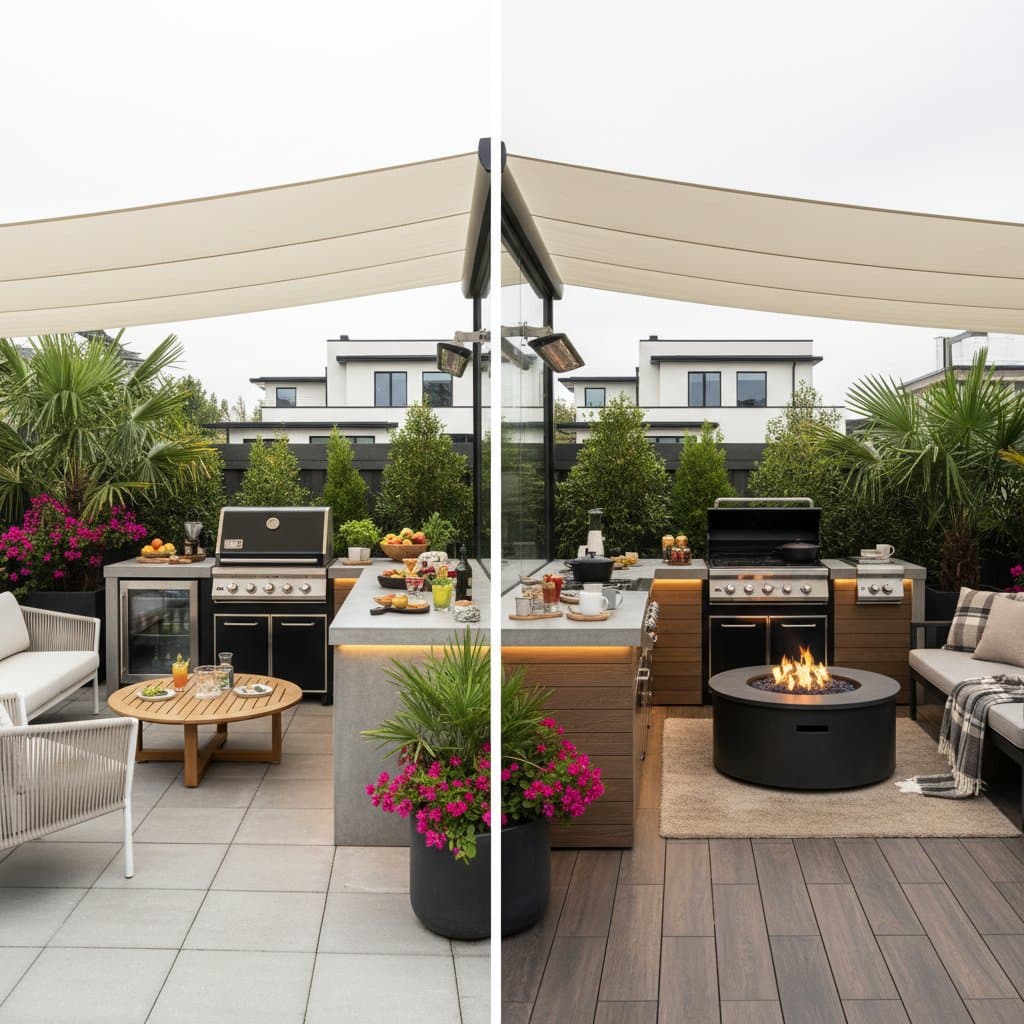
Reimagine Outdoor Kitchens with Seasonal Swaps
Many homeowners observe that their outdoor kitchen performs ideally during summer but requires adjustments as weather patterns change. You are not alone in this experience. The key to maintaining functionality and appeal throughout the year involves implementing seasonal swaps. These targeted modifications enable your outdoor kitchen to accommodate diverse activities, from sunny barbecues to evening gatherings under clear skies.
Home serves as the ideal setting for relaxation, particularly when the outdoor area seamlessly integrates with daily routines.
Highlights
- Explore techniques to adapt your outdoor kitchen for seasonal transitions
- Examine modular design concepts that support versatile cooking arrangements
- Evaluate materials and configurations optimized for continuous outdoor use
- Acquire professional advice on upkeep, illumination, and environmental adaptations
- Investigate economical enhancements that revitalize your area without extensive renovations
Understanding Modular Outdoor Kitchen Design
A modular outdoor kitchen incorporates components that assemble like interlocking elements. These include cabinets, countertops, appliances, and storage solutions that permit reconfiguration or substitution based on seasonal needs. This method facilitates rapid adjustments while preserving the unified aesthetic of your outdoor environment.
Key Features of Modular Designs
| Feature | Description | Seasonal Advantage |
|---|---|---|
| Interchangeable modules | Individual components that allow relocation or exchange | Facilitate straightforward reorganization of cooking and preparation areas |
| Portable cooking units | Grills, smokers, or pizza ovens equipped with mobility features | Relocate to protected zones during inclement weather |
| Weather-resistant materials | Options such as stainless steel, concrete, or marine-grade polymers | Withstand exposure to precipitation, extreme temperatures, or moisture |
| Multifunctional surfaces | Countertops designed for dual purposes like preparation and serving | Optimize space utilization and enhance adaptability |
| Smart storage | Concealed compartments or mobile drawers | Safeguard tools and supplies across varying conditions |
Modular systems provide practicality alongside opportunities for innovation. Consider transforming a summer grilling setup into a winter beverage station through minimal rearrangements.
Summer: Emphasize Bold Entertaining Options
Summer represents the peak period for outdoor culinary activities. Expect to organize barbecues, poolside events, and casual family meals, which demand emphasis on operational efficiency, temperature control, and guest comfort.
Essential modifications:
- Position shade structures such as sails, umbrellas, or pergolas to block direct sunlight.
- Select seating upholstery that promotes airflow and lightness.
- Position mobile refrigeration units or compact coolers for drink storage.
- Incorporate directed illumination beneath work surfaces to support nighttime preparation.
Enhancements aligned with summer menus:
- Replace smoking devices with griddles or flat-top surfaces for expedited cooking.
- Integrate a dedicated drink preparation area or ice dispenser.
- Arrange oversized platters to accommodate self-service dining formats.
Practical recommendation: Employ modular utility carts to streamline hosting duties. Position one for beverages or accompaniments, then store it compactly after use.
Photo: A group of friends assembled near a contemporary modular island featuring an integrated grill, overhead pendant lights, and chilled refreshments.
Winter: Prioritize Simplification and Safeguards
Winter need not signal the end of outdoor kitchen utilization. Strategic modifications allow for intimate assemblies or basic cooking tasks even in cooler conditions.
Essential modifications:
- Encase non-essential appliances with insulated, water-repellent protections.
- Relocate mobile elements to enclosed spaces or beneath overhangs.
- Install weather-appropriate lighting to compensate for reduced daylight.
- Maintain accessibility to a compact zone for grilling or warming beverages.
Upkeep priorities:
- Thoroughly clean ignition sources, drainage systems, and eliminate accumulated residues.
- Relocate textile elements indoors to avoid fungal growth.
- Inspect stone or concrete elements for fractures or erosion from exposure.
- Apply a durable sealant to work surfaces prior to periods of low temperatures or precipitation.
Practical recommendation: The modular framework supports the seasonal removal or repositioning of components, ensuring only vital items remain exposed to adverse elements.
Photo: An enclosed outdoor kitchen displaying a modest grilling section, ambient illumination, and light frost on surrounding foliage.
Lighting and Ambiance Through the Seasons
Strategic illumination influences atmosphere and prolongs the practicality of your outdoor kitchen beyond daylight hours. Seasonal adjustments ensure sustained attractiveness and usability.
Implementation Ideas
- Spring: Utilize garland-style lights and portable lanterns to create gentle, celebratory illumination.
- Summer: Employ linear LED fixtures beneath counters combined with focused task lights for culinary tasks.
- Fall: Opt for bulbs emitting warm golden hues or flameless candles to foster intimacy.
- Winter: Incorporate directional beams or pathway guides to enhance visibility and security.
Photo: An outdoor kitchen illuminated with multiple light layers, ideal for after-dark meals.
Practical recommendation: Select fixtures powered by solar energy or batteries to simplify relocation during periodic refreshes.
Common Mistakes to Avoid
Experienced property owners occasionally encounter challenges when adapting outdoor kitchens across seasons. Sidestep these errors to sustain efficiency and visual appeal.
- Overlooking protective measures: Omitting sealants or coverings accelerates deterioration.
- Excessive surface accumulation: Modular arrangements require open areas for reconfiguration; prevent disorganization.
- Disregarding illumination needs: Inadequate lighting diminishes the effectiveness of superior designs during evenings.
- Neglecting air circulation: Sufficient ventilation inhibits moisture-related issues and preserves equipment.
- Bypassing routine inspections: Regular seasonal evaluations avert expensive future interventions.
Frequently Asked Questions
How can I adapt my outdoor kitchen for continuous use?
Incorporate durable materials, adaptable furnishings, and movable appliances. Supplement with warming devices or shading installations as seasonal demands vary.
What portable appliances best support versatile outdoor cooking?
Prioritize grills, pizza ovens, and induction burners featuring casters or removable connections. These elements simplify transportation and storage.
Is covering the outdoor kitchen necessary during winter?
Indeed. Apply premium enclosures to appliances and surfaces to mitigate condensation and corrosion. Modular components benefit from relocation to secure locations.
Can I refresh the kitchen's appearance on a limited budget?
Certainly. Exchange fabrics, lighting fixtures, and accents periodically. These minor alterations dramatically alter the overall ambiance.
Maximizing Year-Round Enjoyment
Integrate these seasonal strategies to elevate your outdoor kitchen into a versatile haven. Consistent adaptations not only preserve its condition but also enrich gatherings across all weather. Begin with one targeted swap to experience immediate enhancements in comfort and convenience.