
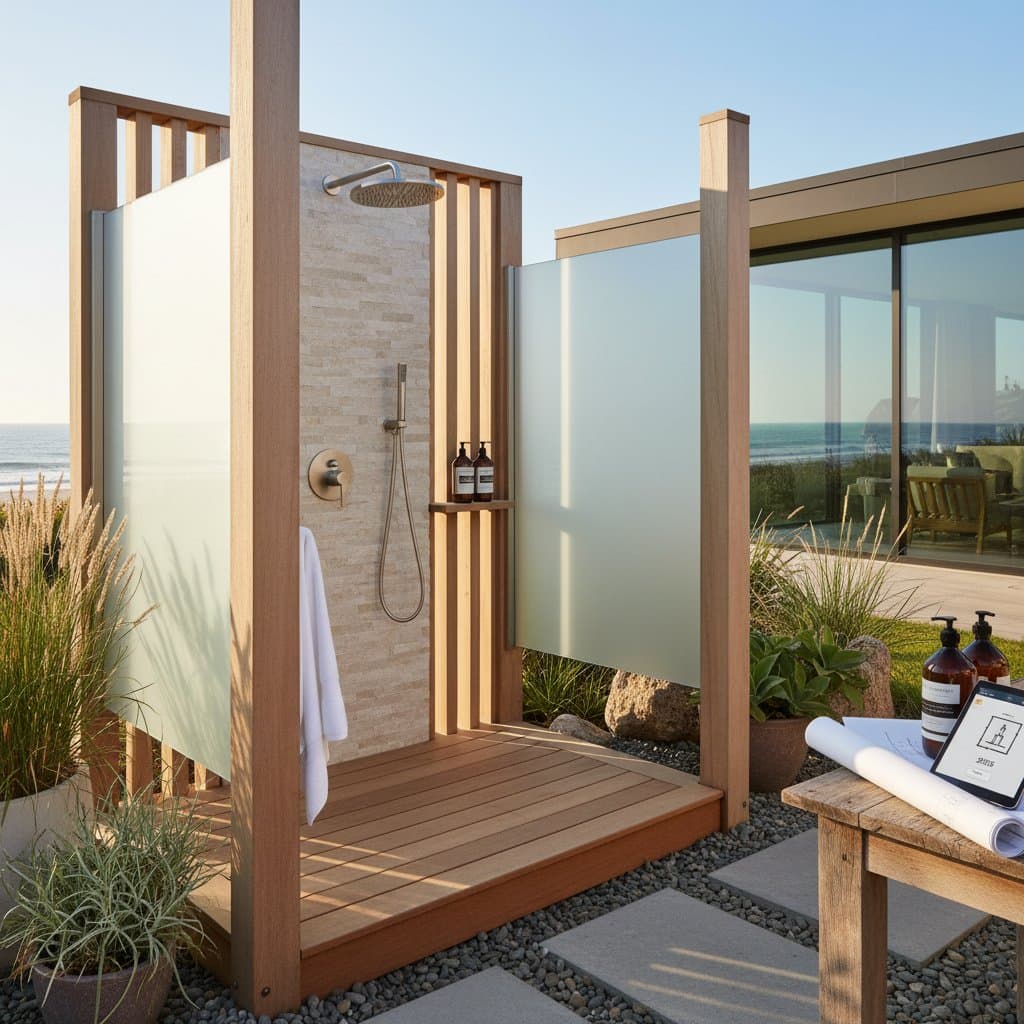
Outdoor Shower Costs in 2025: $1,500 to $20,000
Adding an outdoor shower enhances backyard living spaces, offering convenience after beach days or pool dips. In 2025, costs range widely based on materials, features, and installation complexity. This guide breaks down expenses, planning steps, and strategies to achieve a functional, stylish setup.
Understanding Outdoor Shower Basics
An outdoor shower serves as a dedicated rinsing area, typically connected to home plumbing or a standalone water source. Basic models include a simple hose attachment with a showerhead, while advanced versions feature enclosures, hot water access, and custom tiling. Consider your property layout and usage frequency to determine the ideal type.
Location plays a key role in design. Proximity to the house simplifies plumbing, reducing expenses. Remote spots demand longer pipes or pumps, increasing overall investment.
Key Factors Influencing Costs
Several elements drive the price of an outdoor shower project. Material choices, from budget vinyl to premium teak, significantly affect the total. Labor rates vary by region, with urban areas like San Diego commanding higher fees due to demand and regulations.
Permits add another layer. Local codes require approvals for water connections and electrical work, especially if heating elements are involved. Budget an additional 5 to 10 percent for these administrative steps.
Customization elevates expenses. Features such as multiple heads, built-in benches, or privacy screens contribute to higher costs but improve usability and aesthetics.
Detailed Cost Breakdown
Materials and Fixtures
Entry-level setups start at $1,500. These include basic PVC pipes, a standard showerhead, and minimal enclosure using lattice panels. Expect to spend $200 to $500 on fixtures alone.
Mid-range options, priced from $5,000 to $10,000, incorporate durable materials like cedar wood or fiberglass. Add $1,000 for a hot-cold mixer valve and $500 for weather-resistant tiling.
Luxury installations reach $20,000. Teak or stone enclosures, rain showerheads, and integrated lighting push prices upward. High-end fixtures from brands like Grohe or Kohler can exceed $2,000.
Labor and Installation
Professional installation averages $2,000 to $8,000, depending on scope. Plumbers charge $75 to $150 per hour for connecting lines and ensuring proper drainage. Masons or carpenters add $50 to $100 per hour for building enclosures.
DIY approaches cut labor costs but require skills in plumbing and construction. Beginners should allocate time for learning curves and potential errors, which might lead to rework expenses.
Site preparation influences labor fees. Leveling ground or excavating for drains adds $500 to $2,000, particularly on sloped terrains.
Plumbing and Utilities
Plumbing represents 20 to 30 percent of total costs. Extending water lines from the house costs $10 to $20 per linear foot. For hot water, tie into the existing system or install a dedicated tankless heater for $1,000 to $3,000.
Drainage solutions vary. Gravity-fed drains suit flat areas, while pumps for uphill discharge cost $300 to $800. Greywater systems for eco-friendly diversion add $500 but comply with water conservation rules.
Electrical needs arise for heated showers or lights. Wiring runs $100 to $300, plus permits. Solar-powered options reduce long-term energy bills.
Navigating Permits and Codes
Before starting, check local building codes. In California, outdoor showers often require plumbing permits if connected to municipal water. Submit plans showing pipe routes and drainage to avoid fines up to $1,000.
Zoning laws may restrict placements near property lines. Consult your city's planning department early. Professionals handle paperwork, saving time and ensuring compliance.
Environmental regulations apply in coastal regions. Use low-flow fixtures to meet water efficiency standards, potentially qualifying for rebates.
Design Options for Every Budget
Simple Rinse Stations
For under $2,000, opt for a freestanding post with a hose bibb. Position near a garden hose for cold water only. Add a gravel base for drainage to keep costs low.
These setups suit occasional use and install in a weekend. Enhance with hooks for towels and a nearby bench.
Enclosed Showers
Spend $5,000 to $12,000 for privacy. Glass panels or wooden screens create sheltered spaces. Integrate storage shelves and non-slip flooring for safety.
Choose neutral tones to blend with landscaping. Vertical gardens on enclosure walls add a spa-like feel without extra expense.
Luxury Retreats
Invest $15,000 or more in resort-style features. Steam options, body jets, and Bluetooth speakers transform the area. Pair with adjacent patios for seamless outdoor flow.
Select sustainable materials like recycled glass tiles. These choices appeal to eco-conscious homeowners and boost property value.
DIY Versus Hiring Professionals
DIY projects appeal to handy individuals. Gather tools like pipe cutters and levels, then follow step-by-step guides. Savings reach 50 percent, but assess your expertise to avoid plumbing mishaps.
Hire pros for complex jobs involving electrical or structural changes. They provide warranties and code adherence, justifying the investment for long-term reliability.
Hybrid approaches work well. Purchase pre-fabricated kits for $1,000 to $3,000 and add professional plumbing.
Strategies to Control Expenses
Shop sales for fixtures in early spring. Compare suppliers for bulk material discounts. Reuse existing decking or fencing to minimize new purchases.
Plan for off-season installation when contractor rates drop 10 to 20 percent. Integrate the shower into larger landscaping projects to share labor costs.
Explore financing options through home improvement loans. Some utilities offer incentives for water-saving designs, offsetting initial outlays.
Ongoing Maintenance Essentials
Regular care extends the lifespan of your outdoor shower. Clean fixtures monthly with vinegar solutions to prevent mineral buildup. Inspect seals and pipes annually for leaks.
Winterize in cold climates by draining lines, though San Diego's mild weather reduces this need. Apply sealants to wood elements every two years.
Budget $100 to $300 yearly for upkeep. Prompt repairs prevent costly water damage to foundations.
Realize Your Backyard Oasis
An outdoor shower elevates daily routines into refreshing experiences. With careful planning, you secure a durable addition that fits your lifestyle and finances. Start sketching designs today to enjoy summer comforts sooner.