
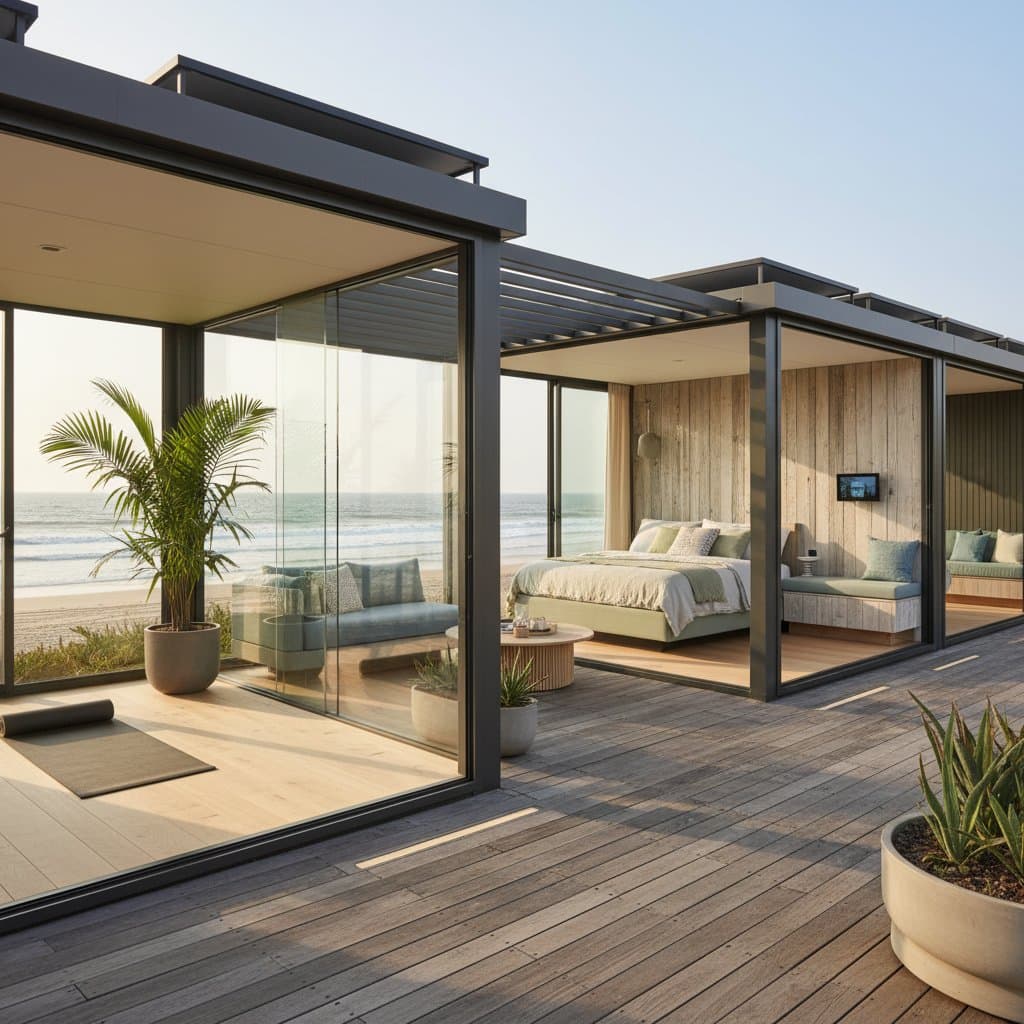
Modular Outdoor Rooms: The Coastal Living Trend Redefining 2026
Homeowners along the coast often seek ways to extend their living spaces while embracing the natural surroundings. Modular outdoor rooms provide a practical solution, transforming backyards into versatile retreats. These prefabricated structures offer quick assembly, customizable designs, and resilience against coastal elements, allowing residents to create personalized areas for relaxation, entertainment, or productivity.
Highlights
- Modular outdoor rooms deliver flexibility, aesthetic appeal, and practical functionality to coastal properties.
- Prefabrication minimizes installation timelines and environmental impact through reduced waste.
- Options include everything from private yoga studios to fully enclosed lounges with panoramic ocean vistas.
- Pricing varies based on dimensions, material selections, and desired customizations.
- Strategic design elements enable year-round usability in varying weather conditions.
- Upkeep remains straightforward when using materials engineered for coastal durability.
Coastal living emphasizes harmony between indoor comfort and outdoor beauty. Modular outdoor rooms achieve this by integrating serene shoreline views with protected, usable space. Homeowners gain versatile areas that enhance daily routines without compromising the region's natural charm.
Why Coastal Homeowners Are Embracing This Trend
The appeal of coastal residences lies in their blend of elegance, ease, and environmental connection. Modular outdoor rooms align perfectly with these priorities, providing dedicated zones for socializing, unwinding, or remote work while preserving access to fresh air and scenery.
Key Benefits
-
Speed of Installation
Factory-built components arrive ready for assembly, often completing the project in two to four weeks. This approach avoids the extended timelines and site disruptions common in on-site construction. -
Design Flexibility
Select from diverse layouts, such as open-air pergolas or fully insulated enclosures with operable glass panels. Modules connect seamlessly to adapt to specific site constraints and personal preferences. -
Sustainability
Off-site manufacturing cuts construction waste by up to 90 percent. Many designs incorporate recycled metals, sustainably harvested woods, or low-VOC finishes to support eco-conscious choices. -
Cost Efficiency
Standardized production in controlled settings stabilizes expenses, with average costs ranging from $15,000 for basic units to $50,000 for elaborate setups. Budgets remain predictable, avoiding unexpected overruns. -
Weather Durability
Structures feature marine-grade aluminum frames, UV-resistant coatings, and sealed joints to combat corrosion from salt spray, high humidity, and gusty winds prevalent in coastal areas.
Design Ideas for Modular Outdoor Rooms
Effective coastal designs prioritize natural light, tactile materials, and seamless transitions between spaces. Modular outdoor rooms incorporate these principles to meet functional needs while enhancing visual appeal. Consider the following configurations to inspire your project.
1. Ocean-View Lounges
Opt for expansive glass walls and pale oak paneling to capture unobstructed sea views. Incorporate linen upholstery and rattan furnishings for a light, breathable atmosphere. Install bi-fold doors that open fully to dissolve boundaries between the interior and surrounding landscape.
2. Modular Guest Suites
These units suit overnight visitors or short-term rentals, featuring a modular bathroom, Murphy bed, and nautical-themed accents like blue-tinted tiles. Select composite decking or porcelain tiles that resist moisture and simplify cleaning after beach days.
3. Outdoor Kitchens and Dining Rooms
Pair a pre-assembled kitchen pod with an adjacent shaded dining pavilion. Equip with powder-coated steel counters, propane-ready grills, and teak storage units designed to endure saline exposure without rusting.
4. Creative Studios or Offices
Position a standalone module for undisturbed work, including built-in desks and ample shelving. Incorporate roof-mounted skylights or high-level windows to flood the space with light while maintaining seclusion from main living areas.
5. Wellness and Yoga Pods
Construct compact, ventilated enclosures with cork or bamboo surfaces for a grounding feel. Add acoustic panels to minimize external noise, creating an ideal sanctuary for mindfulness practices amid coastal sounds.
Photo: A modular yoga pod nestled among native dune grasses, featuring driftwood-inspired decking and soft natural lighting.
Sustainability and Eco-Friendly Options
The modular approach inherently supports greener building practices through efficient production methods. Homeowners can further enhance environmental benefits by integrating targeted features that align with coastal conservation efforts.
Green Features to Consider
- Solar Panels: Mount photovoltaic arrays on roofs to generate electricity for integrated LED lights, ceiling fans, and charging stations.
- Rainwater Collection Systems: Attach gutters to barrels or cisterns that capture runoff for watering native plants or rinsing outdoor surfaces.
- Reclaimed Wood Finishes: Use salvaged timber for cladding and accents, providing rustic character while reducing demand on new resources.
- Energy-Efficient Glazing: Choose low-emissivity glass that blocks solar heat without obstructing views, lowering cooling needs in sunny climates.
Selecting these elements extends your home thoughtfully while promoting a healthier coastal ecosystem.
Pros and Cons of Modular Outdoor Rooms
| Pros | Cons |
|---|---|
| Rapid setup with little site disturbance | Fewer options for highly bespoke designs than custom builds |
| Budget-friendly with fixed pricing models | Module sizes constrained by transport logistics |
| Reduced ecological footprint in manufacturing | Potential permitting hurdles in regulated coastal districts |
| Robust construction for extreme conditions | Additional expenses for plumbing or electrical hookups |
| Adaptable for multiple purposes like offices or entertainment | Possible need for supplemental heating in cooler months |
For most coastal properties, the advantages of efficiency and adaptability surpass the limitations, particularly when avoiding large-scale renovations.
Frequently Asked Questions
What is the difference between modular outdoor rooms and traditional construction?
Modular rooms assemble from factory-prebuilt sections transported to the site for swift integration. Traditional methods build everything in place, which extends durations and increases on-site debris.
Can modular outdoor rooms handle coastal weather?
Yes, they employ galvanized steel, fiberglass reinforcements, and weatherproof sealants to endure salty atmospheres, storms, and moisture. Partnering with certified installers guarantees compliance with regional standards.
Do I need a permit for a modular outdoor room?
Requirements vary by locality and structure type; non-permanent shade structures might bypass reviews, but habitable additions like suites demand building permits and zoning checks.
Are modular outdoor rooms customizable?
Yes, tailor elements from color schemes and layouts to integrated tech like automated shading. Providers often supply modular kits that allow combining units for unique arrangements.
How do I maintain my modular outdoor room?
Conduct annual inspections of seals and hardware, apply protective coatings as needed, and wipe down surfaces with mild solutions. Prioritize glass cleaning to maintain clear sightlines to the horizon.
Integrating Modular Rooms into Your Coastal Routine
With installation complete, explore ways to weave the space into everyday life. Start with simple routines, such as morning yoga sessions in a dedicated pod or casual dinners in an outdoor kitchen overlooking the waves. Experiment with layouts to suit seasons, ensuring the area evolves with your needs.
Consult local experts for site assessments, review material samples, and plan utilities early. This investment yields enduring value, crafting a resilient extension that elevates coastal living for years ahead.