
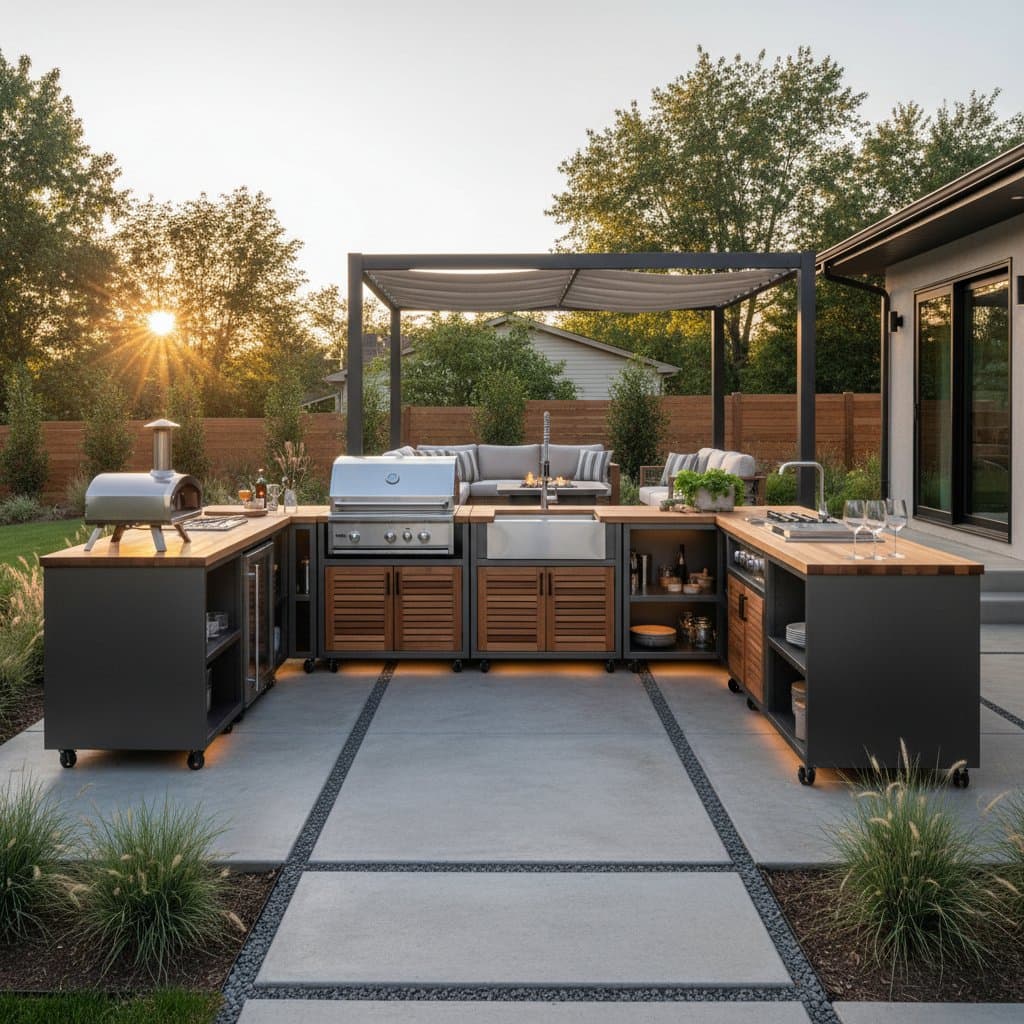
Rearrange Your Outdoor Kitchen Layout in Hours
Modular outdoor kitchens offer homeowners a practical way to create adaptable cooking spaces. These systems use prefabricated components that allow reconfiguration without permanent fixtures or heavy construction. This approach suits those who host varied events, from intimate dinners to large barbecues, while maintaining a professional appearance.
Readers will gain insights into the mechanics of modular designs, selection of robust materials, and strategies for ongoing flexibility. The following sections provide detailed guidance on assembly, rearrangement, and maintenance to support a setup that aligns with personal routines and home aesthetics.
Understanding Modular Outdoor Kitchens
Modular outdoor kitchens consist of independent units engineered for easy assembly and disassembly. Each unit fulfills a dedicated role, such as housing a grill, providing refrigeration, offering storage, or serving as a preparation surface. This structure enables users to tailor arrangements and modify them over time with basic tools.
Key Benefits of a Modular Setup
- Flexibility: Adjust configurations to accommodate different group sizes or activities, such as shifting from a compact family setup to an expansive party layout.
- Ease of Installation: Components link via simple mechanisms, bypassing the need for complex plumbing or structural alterations.
- Cost Control: Begin with essential pieces and incorporate additional modules gradually, scaling investments to match financial plans.
- Style Consistency: Brands provide matching surface treatments and hardware, ensuring a unified visual appeal across all elements.
- Portability: Units can relocate or store during off-seasons, benefiting those in rental properties or with variable outdoor areas.
Such kitchens appeal to individuals seeking customization without long-term commitments. They encourage trial of various arrangements to identify optimal workflows.
Planning Your Flexible Outdoor Kitchen Design
Effective planning forms the foundation of a functional modular kitchen. Consider traffic patterns, equipment placement, and integration with surrounding landscapes to optimize usability.
Map Out Your Cooking Zones
Evaluate daily cooking patterns and entertainment preferences to define zones. A classic work triangle positions the primary cooking appliance, sink, and storage within arm's reach, minimizing movement during tasks.
For instance:
- Grilling Zone: Incorporate a built-in grill and adjacent warming drawers for efficient heat management.
- Prep Zone: Equip with expansive countertops, integrated cutting boards, and pull-out shelves for ingredient organization.
- Serving Zone: Designate space for side tables or modular bars to facilitate food presentation and guest interaction.
Choose Durable Materials
Exterior environments demand materials that withstand temperature fluctuations and precipitation. Prioritize options proven for longevity in outdoor settings.
- Stainless Steel: Offers corrosion resistance and straightforward sanitation through wiping with non-abrasive cleaners.
- Powder-Coated Aluminum: Provides strength at reduced weight, ideal for frequent repositioning.
- Concrete or Stone Composite: Delivers a premium texture while resisting cracks from thermal expansion.
- High-Density Polyethylene (HDPE): Ensures fade resistance and color retention under direct sunlight.
Confirm manufacturer specifications for UV protection and moisture tolerance to prevent premature degradation.
Plan for Utilities
Anticipate requirements for water, electricity, and gas to support integrated features. Opt for systems with standardized connectors that simplify relocation.
Quick-disconnect valves for gas lines and flexible hoses for water enable safe transfers between positions. Electrical setups often include weatherproof outlets compatible with extension cords, reducing dependency on fixed wiring.
How to Swap Outdoor Kitchen Layouts in Hours
Reconfiguring a modular kitchen requires minimal disruption, allowing adjustments for specific occasions. This process emphasizes safety and precision to preserve component integrity.
Step-by-Step Guide
-
Clear the Area: Relocate all items, including cookware and accessories, to a designated storage spot.
-
Disconnect Utilities: Shut off valves for gas and water, then detach plugs from power sources to eliminate hazards.
-
Unlock or Unfasten Modules: Disengage locking pins, clips, or bolts that secure units together, following the system's manual.
-
Shift and Reposition Units: Roll or lift modules to new spots, using dollies for heavier pieces and ensuring even ground contact.
-
Reconnect Utilities: Secure hoses, lines, and cords with provided fittings, then perform leak checks on all joints.
-
Test Functionality: Operate each appliance and drawer to verify smooth operation and stability.
-
Decorate and Enjoy: Integrate complementary elements like planters or string lights to enhance the refreshed arrangement.
Familiarity with the system shortens completion time to under four hours for most setups.
Finding the Right Modular System
Selecting an appropriate modular system involves evaluating compatibility with your space and requirements. Research brands known for robust engineering and customer support to ensure reliability.
Consider factors such as module dimensions, which typically range from 24 to 48 inches wide, allowing seamless integration into patios or decks. Look for systems with expandable options, including add-on cabinets or appliance inserts, to future-proof your investment.
Prioritize manufacturers that offer warranties covering at least five years against environmental damage. User reviews highlight systems with intuitive assembly instructions and versatile mounting hardware. Test compatibility with your utilities by reviewing installation diagrams provided on brand websites.
Budget-conscious choices include entry-level kits starting with core zones, while premium selections feature smart integrations like weather sensors for automated covers.
Frequently Asked Questions
What is the main advantage of a modular outdoor kitchen?
The primary benefit lies in rapid adaptability. Users modify layouts to suit events or preferences, avoiding the costs and delays of traditional builds.
How long does it really take to swap layouts?
Reconfiguration generally requires two to four hours. Factors like unit count and connection complexity influence the duration.
Are modular outdoor kitchens weatherproof?
Most incorporate protective coatings and seals against elements. Verify ratings for your regional weather patterns, such as high humidity or freeze-thaw cycles.
Can I install a modular outdoor kitchen myself?
DIY installation suits basic assemblies. Engage professionals for gas or electrical integrations to meet local codes and ensure safety.
How much does a modular outdoor kitchen cost?
Entry-level configurations begin at $2,000, scaling to $10,000 or more for comprehensive setups. Expenses reflect material quality, appliance inclusions, and customization levels.
Can modular kitchens handle heavy grills or appliances?
Designs accommodate up to 200 pounds per module. Position on stable surfaces and consult load specifications to prevent instability.
What maintenance is required?
Wipe surfaces weekly with mild solutions, apply protective sealants annually, and examine fittings for corrosion. These practices extend usability across seasons.
Maximizing Your Outdoor Cooking Experience
A modular outdoor kitchen unlocks versatile outdoor living by accommodating shifts in routine and occasion. Strategic selection and upkeep yield a durable hub for culinary pursuits.
This adaptable foundation enhances property value and enjoyment, fostering memorable gatherings year-round.