
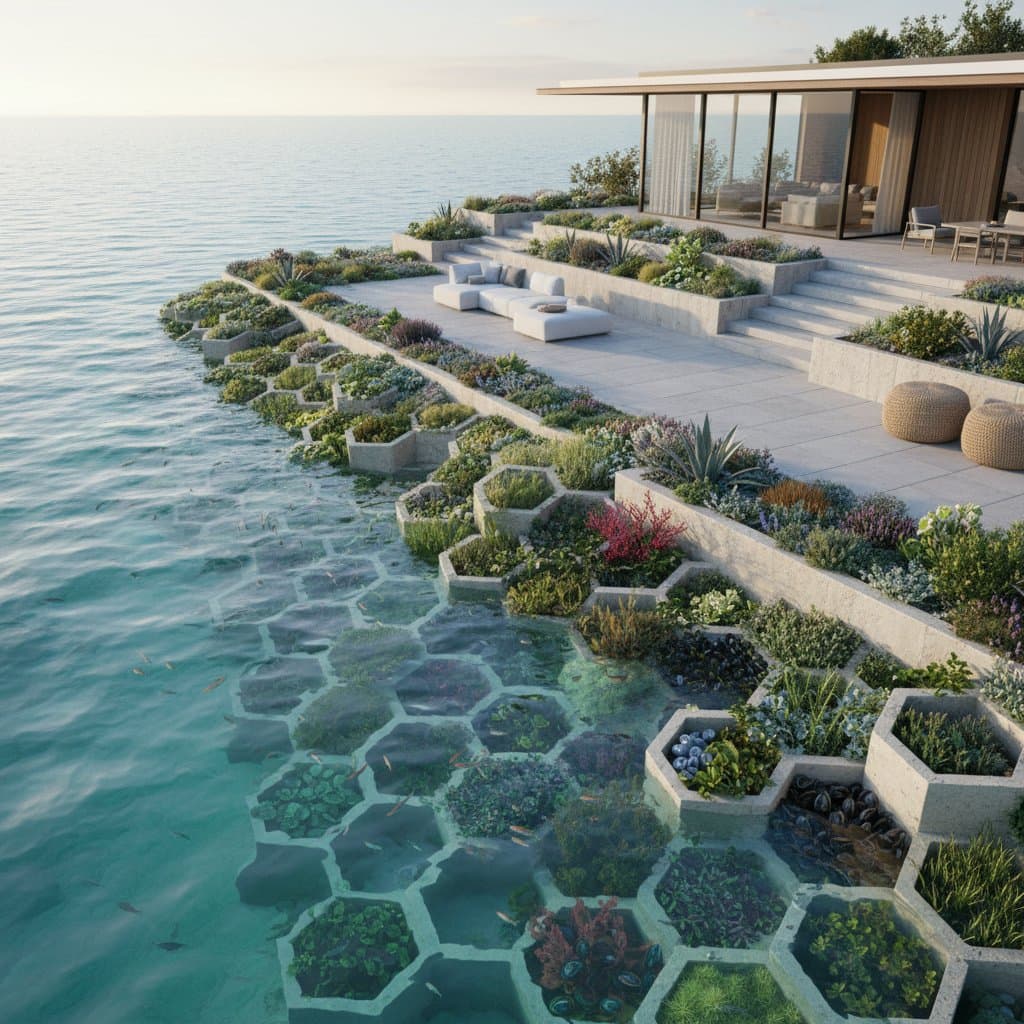
Understanding Living Seawall Costs for Erosion Control
Coastal property owners increasingly select living seawalls to manage erosion in an environmentally responsible manner while preserving shoreline aesthetics. These structures merge conventional barriers with integrated vegetation and marine habitats to mitigate wave impact and promote biodiversity. Costs for living seawalls typically fall between $350 and $700 per linear foot, influenced by factors such as materials, design complexity, and site-specific conditions. For a standard 100-foot shoreline in a region like San Diego, the total investment ranges from $35,000 to $70,000.
Beyond mere construction, living seawalls serve as a strategic approach to asset protection, ecosystem conservation, and ongoing expense reduction when compared to rigid concrete alternatives.
Breaking Down the Costs of Living Seawalls
Project expenses vary based on shoreline dimensions, selected materials, engineering needs, and regulatory approvals. The following table outlines key components:
| Project Element | Cost Range (Per Linear Foot) | Description |
|---|---|---|
| Structural foundation | $150 - $300 | Concrete or stone base ensuring long-term stability |
| Eco-modular panels | $100 - $200 | Textured surfaces designed to foster marine colonization |
| Planting and habitat features | $50 - $100 | Integration of native plants, oyster structures, or seagrass beds |
| Labor and installation | $50 - $100 | Expertise from marine specialists using specialized equipment |
| Permitting and design | $20 - $50 | Comprehensive environmental evaluations and detailed engineering blueprints |
The combined average reaches $350 to $700 per linear foot. Sites with deep waters, intense tidal forces, or restricted access often incur elevated charges. Although the initial outlay exceeds that of basic concrete installations, living seawalls deliver superior durability and ecological contributions over time.
Traditional Seawalls Versus Living Seawalls
| Type | Average Cost (Per Linear Foot) | Lifespan | Environmental Impact | Maintenance |
|---|---|---|---|---|
| Traditional concrete wall | $250 - $500 | 25-40 years | High; restricts marine habitats | Moderate to high |
| Living seawall | $350 - $700 | 30-50 years | Low; enhances ecosystems | Low to moderate |
Conventional seawalls effectively counter waves but frequently redirect energy to the seabed, accelerating foundational erosion. In contrast, living seawalls dissipate and redirect forces, minimizing scour while facilitating natural sediment buildup and habitat development.
Calculating Return on Investment
An initial premium for living seawalls translates to returns of 60 to 90 percent via diminished erosion risks, streamlined upkeep, and elevated property appraisals. In waterfront locales, the blend of visual allure and sustainability further bolsters market appeal.
| Benefit | Estimated ROI | Description |
|---|---|---|
| Property protection | 70 - 90% | Safeguards against land erosion and infrastructure harm |
| Maintenance savings | 60 - 80% | Fewer interventions required relative to rigid structures |
| Ecological value | 50 - 70% | Promotes diverse wildlife and improves local water quality |
| Aesthetic and recreational benefits | Variable | Improves scenic views and supports activities like shoreline access |
Frequently Asked Questions on Living Seawalls
What serves as the primary function of a living seawall?
It counters coastal erosion, creates habitats for aquatic species, and upholds natural shoreline appearance.
What duration can a living seawall sustain?
Proper care extends its service life to 30 to 50 years, frequently surpassing that of conventional barriers.
Does a living seawall demand ongoing maintenance?
Affirmative, though requirements remain lighter than for traditional options. Schedule routine checks, vegetation management, and debris clearance to sustain functionality.
Are regulatory permits necessary?
In most coastal jurisdictions, approvals for environmental and building standards apply. Authorities assess proposals for potential ecological effects.
Is a do-it-yourself living seawall feasible?
Minor vegetative additions suit independent efforts, yet core structural elements adjacent to water necessitate professional involvement.
Will it elevate property worth?
Indeed, eco-oriented shoreline enhancements draw buyers prioritizing sustainability and mitigate future hazard exposures.
Sustaining Your Living Seawall Over Time
Post-installation, a living seawall integrates dynamically into its surroundings. Vegetation flourishes, aquatic communities take root, and the assembly evolves within the broader coastal framework. Conduct regular assessments to verify foundational integrity and botanical vigor. Consider incorporating practical additions, such as observation platforms or watercraft docking areas, to maximize safe utilization of the waterfront.
Opting for a living seawall extends beyond basic erosion mitigation. This choice embodies dedication to enduring coastal stewardship, securing assets, and amplifying environmental harmony. Through precise engineering allied with nature-inspired elements, property owners establish robust shorelines poised for generational endurance.