
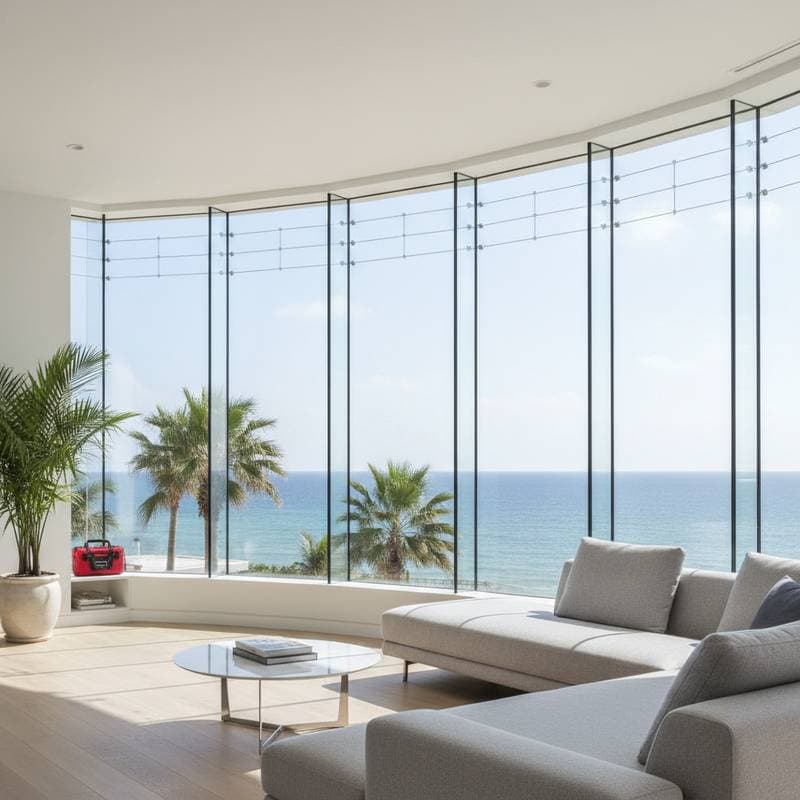
30% Drop in Impact Glass Costs Enhances ROI for Coastal Remodels
Imagine standing in a coastal living room where sunlight streams through clear, protective windows, accompanied by the gentle sound of ocean waves. These windows provide more than aesthetic appeal; they safeguard against high winds, salt air, and debris. Recent market changes have reduced impact glass costs by approximately 30 percent, transforming this upgrade from a luxury into a practical investment that elevates the return on investment for coastal home remodels.
This article examines the implications of the price reduction on remodel budgets, explores various impact glass options, and guides decisions on installation approaches. Readers will discover additional savings strategies and maintenance practices to ensure long-term durability.
Key Insight: Full-home installations now typically range from $8,000 to $18,000, enhancing property value, safety, and insurance savings. Homeowners seeking security and increased resale potential should obtain professional quotes ahead of the upcoming storm season.
Cost Breakdown
The 30 percent decline in impact glass prices has reshaped the financial landscape of coastal renovations. Previously, a complete home installation exceeded $20,000; current estimates fall between $8,000 and $18,000, influenced by home size, window configurations, and frame selections. For a typical mid-sized coastal residence, the average expenditure approaches $12,000.
Primary Cost Elements
- Glass Variety: Laminated impact glass costs $45 to $60 per square foot, whereas insulated versions with low-emissivity coatings range from $70 to $85 per square foot.
- Frame Choices: Vinyl frames offer affordability at $500 to $1,000 per window; aluminum options average $700 to $1,200; wood-clad frames surpass $1,400.
- Installation Labor: Professional services charge $100 to $300 per window, varying with access challenges and removal requirements.
- Permits and Compliance: Coastal regulations demand wind-rated approvals, with permits adding $250 to $600.
- Supplementary Options: Features such as UV protection, noise-reducing layers, or custom shading increase overall expenses by 10 to 20 percent.
Reasons for the Decline: Manufacturing innovations and increased demand in storm-vulnerable areas have decreased production expenses. Suppliers now maintain standard inventories of impact-rated materials, minimizing shipping and customization fees.
Insulated Laminated Impact Glass
This variant integrates laminated glass with an insulating gas or air space to optimize energy use.
Ideal Applications: Residences requiring storm resistance alongside climate control.
Advantages: Minimizes heat transfer, attenuates external sounds, and boosts market appeal.
Drawbacks: Elevates installation expenses; heavier panels necessitate frame reinforcements.
Photo: PC Photography / Getty Images
Polycarbonate and Hybrid Configurations
Certain systems incorporate a polycarbonate core in place of traditional glass, delivering lightweight resilience for severe conditions.
Ideal Applications: Properties directly exposed to intense winds and saltwater corrosion.
Advantages: Highly shatter-resistant, impervious to rust, and low-maintenance.
Drawbacks: Prone to surface scratches compared to glass; commands higher prices.
Photo: John Coletti / Getty Images
Essential Considerations for Upgrades
Evaluate these aspects prior to selecting impact glass:
- Environmental Demands: Structures within one mile of the shore encounter accelerated corrosion and elevated wind forces. Opt for rust-resistant coated aluminum or composite frames.
- Insurance Advantages: Certified installations often qualify for premium reductions of 5 to 15 percent.
- Market Value Impact: In coastal regions, storm-resistant features appeal to buyers, potentially increasing resale prices by up to 20 percent.
- Efficiency Gains: Low-emissivity treatments lower energy demands for cooling.
- Aesthetic Integration: Contemporary frame designs and tint options complement architectural styles.
Strategies for Enduring Maintenance
Impact glass demands little upkeep, yet consistent care sustains its appearance and functionality.
- Clean surfaces every three months using mild soap and water; steer clear of abrasive tools.
- Examine seals following intense weather events to detect potential water entry.
- Apply silicone lubricant to sliding mechanisms annually.
- Monitor caulking for deterioration, particularly on seaward exposures.
- Refrain from high-pressure washing near frame edges to prevent seal damage.
Such practices maintain transparency, uphold insurance qualifications, and satisfy regulatory standards.
Frequently Asked Questions
How durable is impact glass?
Certified units endure 20 to 25 years or longer under regular maintenance. Laminated components retain clarity and integrity when shielded from excessive salt accumulation.
Are shutters necessary alongside impact windows?
Local codes in most coastal areas waive shutter requirements for approved impact glass. Some owners add shutters for added protection in extreme events.
Is glass replacement feasible without full window overhaul?
Affirmative, provided existing frames remain robust and code-compliant. Retrofit approaches cut costs by 20 to 30 percent relative to complete replacements.
Does impact glass mitigate external noise?
Yes, the interlayer absorbs vibrations, reducing sound penetration by as much as 40 percent—beneficial near high-traffic coastal areas.
Steps to Upgrade Effectively
Lower prices and superior materials position impact glass as a prime choice for coastal property owners. This investment delivers unmatched security, comfort, and financial benefits.
Begin by identifying high-risk windows, then solicit estimates from code-certified contractors. Post-installation, expect reduced noise, energy savings, and resilience against coastal challenges.