
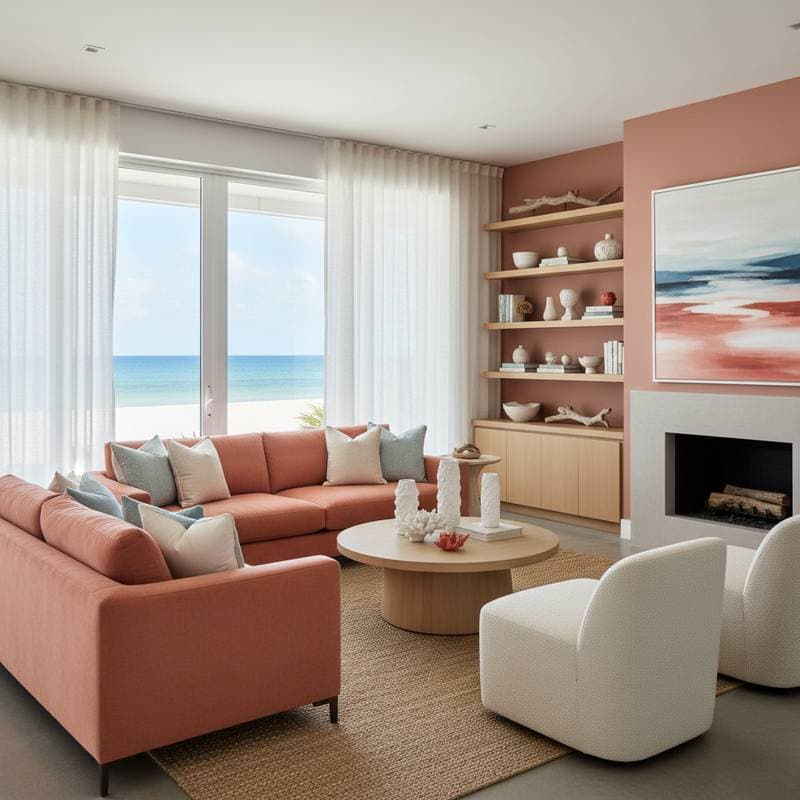
Why Coral Tones Are Replacing Blues in 2026 Beach Homes
Soft coral tones ascend in coastal interiors, infusing beach homes with warmth, vitality, and a contemporary edge. Designers draw inspiration from ocean sunsets and sun-kissed shores to craft palettes that evoke the essence of seaside living. These colors lead 2026 trends by striking a balance between lively energy and tranquil calm, ideal for spaces that invite relaxation while sparking interest.
Coral provides a subtle yet impactful alternative to traditional blues, offering homeowners a way to refresh their environments without straying from coastal roots. As preferences evolve toward warmer, more optimistic aesthetics, coral positions itself as the go-to hue for creating inviting, light-filled rooms. This transition reflects broader shifts in design philosophy, emphasizing emotional uplift in everyday living areas.
The Appeal of Coral in Coastal Design
Coral hues combine elements of pink, orange, and peach to produce a tone that radiates natural positivity. Within coastal contexts, these shades integrate seamlessly with sandy neutrals, whitewashed woods, and hints of ocean blue. Homeowners select coral for statement elements such as accent walls, upholstered furniture, or intricate decorative pieces, introducing cheer and sophistication to their surroundings.
This color's rise stems from its ability to mirror the dynamic beauty of marine life and twilight skies along the shore. Designers appreciate how coral bridges cool and warm palettes, adapting to diverse styles from sleek modern to relaxed bohemian or classic coastal motifs. Its presence adds gentle warmth that enhances rather than dominates, fostering an atmosphere of effortless elegance.
Reasons coral trends in coastal spaces:
- Captures the vivid hues of sea life and sunset horizons
- Harmonizes with both cool blues and warm earth tones
- Supports versatility across modern, bohemian, and traditional aesthetics
- Introduces subtle warmth that elevates room ambiance without intensity

Complementary Materials and Textures
Coral tones gain depth and character when combined with natural materials that echo beach environments. Texture emerges as a key element in coastal design, contributing to layers of softness and visual interest that prevent flatness.
In practice, select finishes that amplify coral's organic feel. For instance, incorporate whitewashed oak flooring to ground the space with a light, weathered patina reminiscent of driftwood. Pair this with rattan armchairs or wicker side tables, which introduce airy, handcrafted details that soften hard edges.
Fabrics play a vital role too; opt for textured linens in neutral tones for curtains or throw pillows, allowing coral accents to pop against their subtle weave. Stone countertops or terrazzo floors add durability and a cool contrast, while brushed brass hardware or matte gold fixtures provide metallic warmth that complements coral's glow.
Recommended materials to pair with coral:
- Whitewashed oak or bleached pine for flooring and built-ins
- Rattan or wicker for seating and storage
- Textured linen or cotton for upholstery and soft goods
- Stone or terrazzo for surfaces and accents
- Brushed brass or matte gold for hardware and lighting
These choices maintain brightness and airflow, ensuring the design feels expansive and connected to the outdoors. By layering textures, interiors achieve a tactile richness that invites touch and prolongs visual engagement.
Balancing Coral with Neutrals
Vibrant coral requires thoughtful integration to preserve the peaceful essence of beach homes. Effective designs allocate coral to about 20 to 30 percent of the color scheme, surrounded by ample neutrals that promote openness and flow.
Start with foundational neutrals like warm white or ivory walls, which reflect light and expand perceived space. Introduce taupe or mushroom gray in area rugs or larger furniture pieces to add subtle depth without competing for attention. Light sand or beige tones work well for trim and millwork, evoking the soft palette of dunes.
For a nod to traditional coastal elements, incorporate soft light blue or seafoam green in smaller doses, such as vase fillers or artwork frames. This approach ensures coral serves as a focal point, drawing the eye while the neutrals provide a calming backdrop.
Effective neutral pairings for coral:
- Warm white or ivory for walls and ceilings
- Taupe or mushroom gray for upholstery and rugs
- Light sand or beige for trim and textiles
- Soft light blue or seafoam green for accents
Such balance creates cohesive, breathable interiors that feel curated yet approachable, enhancing daily comfort in seaside settings.
Emerging Coral-Inspired Design Ideas
The influence of coral extends far beyond simple paint applications, inspiring innovative elements that deepen coastal narratives. Designers experiment with patterns and materials that echo coral reefs, prioritizing sustainability alongside aesthetics.
Consider installing coral-textured wall panels crafted from recycled fibers, which add three-dimensional interest to living areas without altering layouts. Sustainable fabrics, dyed in soft coral shades using low-impact processes, suit curtains or cushions, blending eco-consciousness with visual appeal.
Ceramic tiles featuring subtle reef motifs transform bathrooms or kitchens into underwater-inspired retreats, their glossy finishes catching light to mimic ocean shimmer. Lighting fixtures in coral hues, such as pendant lamps or sconces, diffuse a warm glow that shifts with the day's natural light, creating dynamic moods.
Innovative coral applications:
- Textured wall panels for added organic layers
- Eco-dyed sustainable fabrics for soft furnishings
- Reef-motif ceramic tiles for functional surfaces
- Coral-toned fixtures for ambient illumination
These advancements allow homeowners to infuse personality into their spaces while honoring environmental values, resulting in designs that evolve with trends and personal tastes.

Frequently Asked Questions on Coral in Beach Homes
What qualities make coral suitable for beach home interiors?
Coral embodies coastal vibrancy, delivering warmth that aligns naturally with ocean blues and sandy neutrals, evoking the shore's inherent beauty.
How can coral fit into compact rooms?
In limited spaces, apply coral sparingly through pillows, artwork, or rugs to inject energy and prevent the area from feeling confined.
Which coral variations gain popularity?
Designers favor soft blush coral for subtlety, deep salmon for boldness, and muted peachy coral for everyday versatility in coastal schemes.
Creating Invigorating Coastal Interiors with Coral
Integrating coral into beach home designs fosters environments brimming with light and positivity. Apply a gentle blush to bedroom walls for a soothing retreat, or use bolder coral in outdoor patios to energize gatherings.
Layer with natural weaves and stone elements to ground the vibrancy, ensuring each room connects to the broader coastal landscape. This approach yields spaces that refresh the spirit, blending timeless allure with forward-thinking style for enduring seaside satisfaction.