
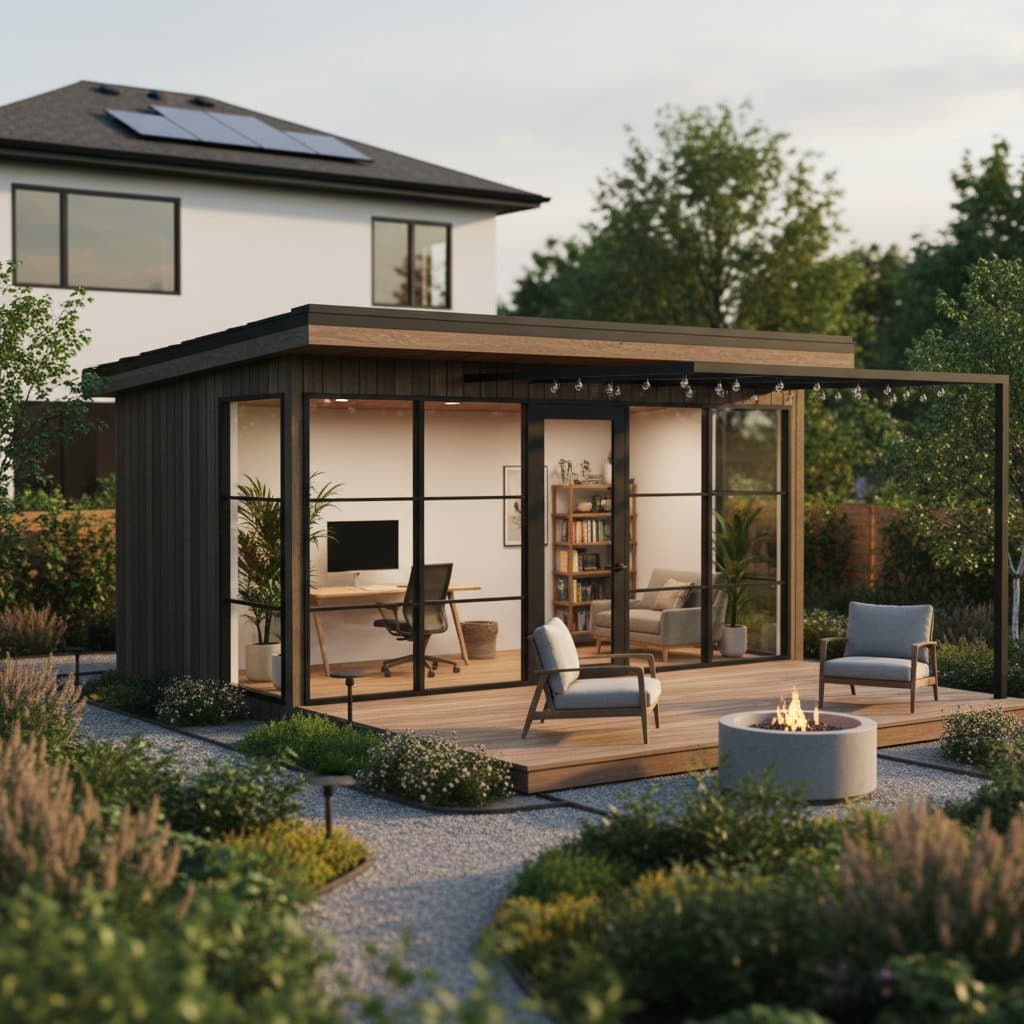
Unlock 300 Square Feet of Permit-Free Outdoor Space
Picture a modern backyard structure that serves as a dedicated home office, yoga studio, or serene retreat, all without the delays of permit approvals or bureaucratic hurdles. Modular outdoor rooms provide this convenience when designed to align with local regulations. In San Diego, structures up to 300 square feet often qualify for permit exemptions if they meet specific criteria for size, use, and construction.
This comprehensive guide explains the process for building a permit-free backyard room in San Diego. It details associated costs, available prefab and modular options, and strategies to integrate the space aesthetically with your existing home. Readers gain insights into compliance requirements, material selections, and professional services for installation. For those seeking expert assistance, consider obtaining estimates from contractors experienced in modular constructions.
Key takeaway: A 300-square-foot modular outdoor room typically avoids permitting if it remains detached, single-story, and non-habitable. Budget between $8,000 and $35,000, influenced by material choices and customization levels.
Essential Cost Breakdown
The expense for a permit-free modular outdoor room up to 300 square feet varies from $8,000 to $35,000, averaging approximately $18,000. Factors such as design intricacy, material quality, and the extent of self-performed labor determine the final amount. Understanding these elements allows for informed budgeting and potential savings.
Core cost components consist of:
- Materials: Prefabricated panels, insulation materials, roofing systems, and interior finishes range from $25 to $90 per square foot. Opt for durable options like fiber cement siding or insulated metal panels to withstand local weather conditions.
- Foundation or base: A basic concrete slab or elevated deck platform contributes $1,000 to $4,000. Select a pier foundation for uneven terrain to ensure stability without extensive excavation.
- Electrical and plumbing: Basic setups, if permissible under exemption rules, cost $800 to $2,500. Focus on energy-efficient LED lighting and simple outlet configurations to minimize expenses.
- Delivery and assembly: Transportation via truck or crane adds $500 to $1,500. Schedule during off-peak seasons to reduce fees from suppliers.
- Regulatory nuances: Exemptions frequently apply to structures under 120 square feet classified as storage sheds. Larger builds up to 300 square feet qualify in certain zones for accessory uses without utilities or habitation.
To maintain permit-free status, ensure the structure stands detached from the main residence, limits to one story, and avoids designation as a primary living quarters. Verify current San Diego zoning ordinances through your local planning department prior to any groundwork.
DIY Installation Versus Professional Services
Assembling a prefab outdoor room offers choices between self-directed efforts and hiring specialists. Each approach presents distinct advantages in terms of time, expense, and reliability. Evaluate personal skills and project scope to select the best method.
DIY Installation
- Cost: Reduces overall expenses by 20 to 40 percent through elimination of labor fees.
- Time commitment: Requires 3 to 7 days, varying with unit dimensions and individual pace.
- Required skills: Involves moderate proficiency with tools like drills, levels, and saws. Follow manufacturer instructions precisely for secure panel connections.
- Potential drawbacks: Errors in alignment or sealing may compromise structural integrity or invalidate manufacturer guarantees.
Professional Installation
- Cost: Incorporates $2,000 to $8,000 for skilled labor.
- Time commitment: Professionals complete the project in 2 to 3 days, accelerating occupancy.
- Expertise level: Certified installers adhere to building standards and local guidelines.
- Additional advantages: Suited for intricate layouts or integrations involving electrical systems. Professionals often provide warranties on workmanship.
For any electrical modifications, engage a licensed electrician to comply with safety codes, even in permit-exempt scenarios. Plumbing additions similarly demand certified oversight to prevent hazards.
Key Design and Site Considerations
Effective planning ensures the outdoor room enhances usability and integrates with your property. Address environmental, functional, and aesthetic aspects to maximize long-term satisfaction.
- Climate adaptation: Select materials resistant to San Diego's coastal moisture and intense sunlight, such as composite panels or pressure-treated lumber. Incorporate ventilation features to manage temperature fluctuations.
- Site orientation: Align windows and doors to optimize airflow from prevailing ocean breezes and capture morning sunlight for natural illumination.
- Access logistics: Allocate space for delivery vehicles, typically needing 10 to 15 feet of clearance. Assess gate widths and pathway conditions in advance.
- Aesthetic integration: Coordinate roof angles, exterior colors, and detailing with your home's architecture. Use neutral tones or matching accents for visual unity.
- Durability enhancements: Employ rust-resistant galvanized hardware, premium silicone sealants, and UV-protective coatings. These choices extend the structure's service life beyond 20 years with minimal maintenance.
Consult site surveys or professional assessments to identify soil stability and drainage patterns, preventing future issues like settling or water pooling.
Frequently Asked Questions
Does a 300-square-foot backyard room truly require no permit in San Diego?
Yes, many jurisdictions permit detached accessory structures of this size without approvals, provided they adhere to height limits, setback requirements, and non-residential designations. Contact your municipal planning office for zone-specific confirmations.
Is full-time residence possible in a permit-free outdoor room?
No, exemptions apply only to accessory uses such as workspaces, exercise areas, or hobby rooms. Habitable dwellings necessitate full permitting and inspections for safety and sanitation.
How does a modular outdoor room impact property value?
Well-designed additions enhance marketability by providing versatile space, potentially increasing resale appeal. Although not added to square footage calculations, they attract buyers seeking modern amenities.
Which foundation option suits most prefab rooms?
Concrete slabs offer robust support for substantial units, while helical piers or modular deck systems accommodate lighter designs on sloped lots. Prioritize proper grading and perimeter drainage to avoid moisture problems.
Can relocation occur for a modular outdoor room?
Yes, prefabricated models disassemble easily for transport. This portability supports adaptability to changing needs, such as yard reconfiguration or property sales.
Steps to Construct Your Permit-Free Backyard Room
A 300-square-foot outdoor addition unlocks versatile opportunities for relaxation, productivity, or entertainment without regulatory entanglements. Modular solutions enable realization within weeks, transforming underutilized yard areas into valuable extensions.
Begin by reviewing San Diego's zoning maps and consulting planners to affirm exemption eligibility. Next, evaluate prefab suppliers for models fitting size and style preferences. Finally, proceed with site preparation and assembly, prioritizing quality to ensure enduring functionality and enjoyment.