
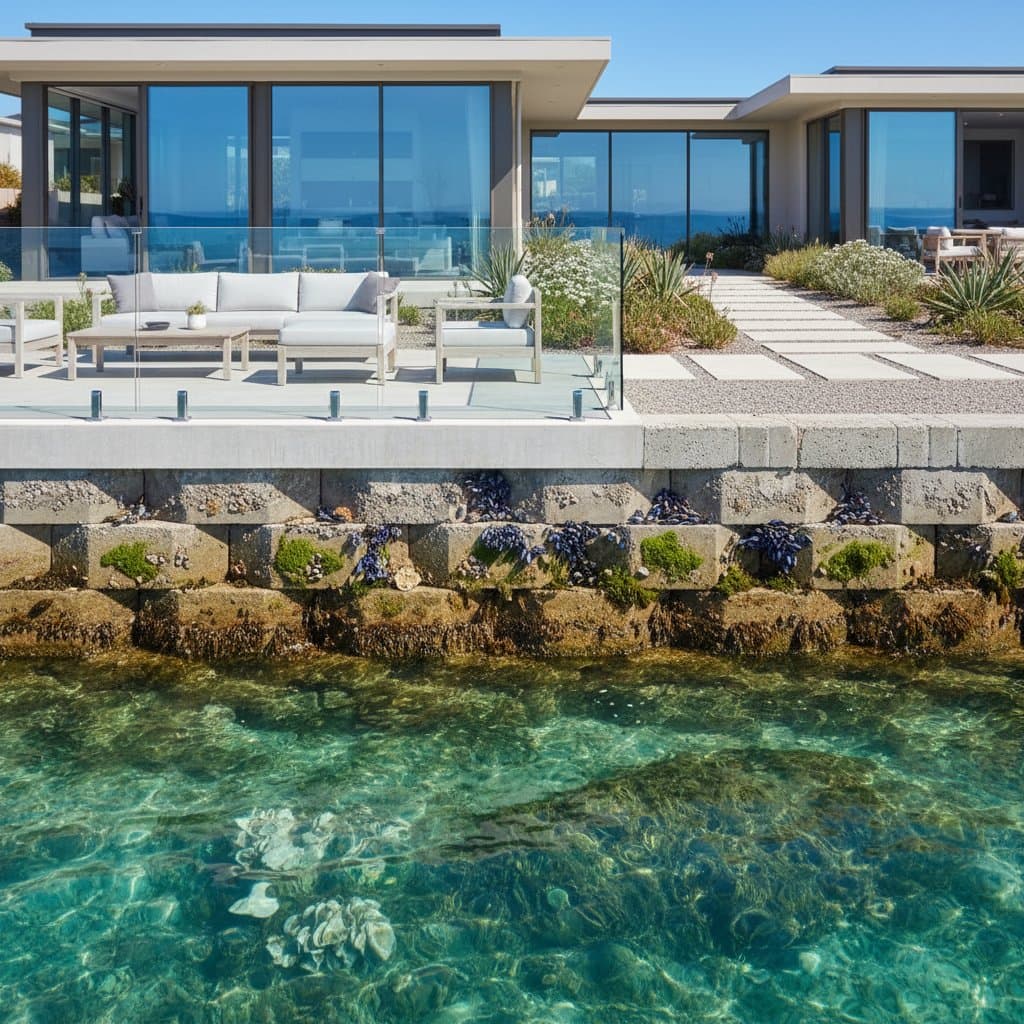
Why Living Seawalls Outperform Concrete for Shores
Imagine standing along a serene waterfront where gentle waves lap against a shoreline alive with small fish, oysters, and native seagrasses. Contrast that scene with a stark concrete wall, gray and barren, that absorbs heat and disrupts natural water flow. Both options prevent erosion, yet only living seawalls foster ecological vitality.
Living seawalls represent innovative coastal defenses that integrate engineering strength with environmental enhancement. These structures secure shorelines much like conventional concrete barriers, while simultaneously rebuilding habitats, purifying water, and providing robust protection against sea level rise. For waterfront property owners and coastal communities, living seawalls deliver aesthetic appeal alongside functional reliability. Installation costs range from $250 to $700 per linear foot, influenced by material choices and project scale; these figures align closely with premium concrete alternatives. Consult experienced marine contractors for site-specific quotes, including details on local regulations and environmental assessments.
Article Overview
This guide explores key aspects of living seawalls, from design varieties to practical implementation.
- Cost considerations
- Available types and designs
- Professional versus self-installation
- Strategies for cost reduction
- Maintenance essentials
- Environmental and property advantages
- Common questions
Types and Designs
Living seawalls come in several configurations, each suited to specific coastal conditions and aesthetic preferences. Selection depends on factors such as water salinity, wave exposure, and available space.
Modular Living Panels
Modular panels consist of prefabricated units featuring textured surfaces, recesses, and ledges that promote attachment by marine organisms. These panels secure to a foundational framework akin to standard seawall supports.
Ideal applications: Compact urban docks or constrained waterfront areas.
Advantages: Exceptional durability, straightforward upkeep, and rapid deployment for immediate erosion control.
Drawbacks: Elevated upfront expenses and the necessity for expert installation to ensure structural integrity.
Hybrid Rock and Vegetation Walls
Hybrid walls combine armored rock bases with integrated native vegetation and geotextile fabrics for soil retention. The rocky foundation dissipates wave forces, while plant roots anchor sediments against tidal shifts.
Ideal applications: Gently sloped residential shorelines or naturalistic settings.
Advantages: Attractive integration with surroundings, habitat enhancement for local wildlife, and effective filtration of stormwater runoff.
Drawbacks: Ongoing vegetation management, including seasonal pruning, and potential replanting following severe weather events.
Oyster Reef Integration
This approach incorporates oyster reef modules or accumulated shell structures at the seawall base, forming a dynamic filtration system. Maturing oyster populations reinforce the barrier and clarify surrounding waters through natural filtration.
Ideal applications: Brackish or marine environments with suitable salinity levels.
Advantages: Promotion of diverse ecosystems, gradual self-reinforcement, and long-term water quality improvements.
Drawbacks: Incompatibility with freshwater zones, where oyster survival proves challenging.
Cost Factors
Budgeting for a living seawall requires careful evaluation of multiple variables to align expenses with project goals. Initial outlays cover materials, labor, and preparatory work, while long-term savings emerge from durability and ecological benefits.
Key influences include site accessibility, which affects equipment transport and labor rates; material selections, where sustainable options like recycled aggregates may add 10 to 20 percent to costs but qualify for rebates; and design complexity, as custom features for high-wave areas demand reinforced engineering. Permitting fees vary by region, often adding $1,000 to $5,000, and environmental impact studies ensure compliance with coastal protection laws. Overall, living seawalls match or undercut concrete equivalents when factoring in reduced maintenance over 30 years. Obtain multiple bids from certified contractors to compare total ownership costs, including potential incentives for green infrastructure.
DIY Versus Professional Installation
While some waterfront enhancements lend themselves to homeowner efforts, living seawalls typically demand professional expertise due to their structural and regulatory demands.
DIY approaches suit minor additions, such as planting vegetative buffers along existing barriers, using off-the-shelf kits for small-scale oyster modules. These options minimize costs but limit scope to low-risk sites with calm waters. Professionals, however, handle comprehensive builds, ensuring compliance with engineering standards and integrating site-specific adaptations like scour protection.
Hiring experts proves essential for modular or hybrid systems, where improper alignment risks failure during storms. Expect professional projects to incur 40 to 60 percent of the budget in labor, yet this investment guarantees longevity and warranty coverage. For DIY enthusiasts, start with consultations to assess feasibility and avoid costly errors.
Strategies to Reduce Costs
Investing in a living seawall yields enduring value, and strategic choices can optimize affordability without compromising quality.
-
Incorporate recycled components. Opt for systems using reclaimed concrete or oyster shells, which lower material expenses by up to 15 percent while supporting sustainability.
-
Coordinate community efforts. Collaborate with adjacent property owners on shared installations to distribute setup and permitting costs.
-
Pursue financial support. Explore grants from environmental agencies or local programs dedicated to shoreline restoration and climate adaptation.
-
Select hybrid configurations. Blend minimal structural elements with expansive vegetative zones for effective protection at reduced scale.
-
Emphasize proactive upkeep. Implement scheduled checks to address issues early, averting major overhauls that inflate future budgets.
Maintenance and Longevity
With diligent care, living seawalls endure 30 to 50 years, surpassing many concrete installations that succumb to cracking and deterioration. The biological components actively reinforce the structure as roots expand and marine encrustations bind surfaces.
Essential tasks involve periodic vegetation trimming to prevent overgrowth, debris clearance post-storm to maintain flow, and base inspections for erosion signs. Annual professional reviews, particularly after intense weather, verify the stability of anchors and drainage features. These measures not only extend service life but also amplify ecological contributions, creating a self-sustaining coastal asset.
Environmental and Lifestyle Advantages
Beyond erosion control, living seawalls enrich coastal ecosystems by fostering biodiversity through sheltered niches for fish, invertebrates, and birds. They naturally filter pollutants from runoff, mitigating algal blooms and supporting clearer waters.
Wave energy dissipation minimizes reflective scour on adjacent shores, safeguarding neighboring assets. Aesthetically, the organic textures and greenery transform utilitarian barriers into landscaped features that harmonize with natural surroundings. Property owners enjoy enhanced recreational spaces, from tide pool explorations to increased wildlife sightings, which elevate living experiences and bolster market values by 5 to 10 percent in eco-conscious regions.
Frequently Asked Questions
How long does installation require? Projects typically span 2 to 6 weeks, varying with scope and approvals. Prefabricated modular elements accelerate timelines, while custom hybrids may extend due to planting phases.
Are living seawalls effective in high-wave environments? Affirmative, provided designs incorporate reinforcements such as deeper footings or energy-absorbing bases tailored to local conditions.
What maintenance frequency is recommended? Quarterly visual checks suffice for stable sites, with annual professional assessments ensuring optimal performance.
Can living seawalls integrate with existing structures? Yes, retrofitting options allow attachment to concrete walls, enhancing ecology without full replacement.
Steps to Implement Your Living Seawall
Transitioning to a living seawall begins with a professional site evaluation to match designs with your shoreline's unique profile. Gather quotes from vetted contractors, review incentive programs, and secure permits to streamline the process. Once installed, commit to routine care for sustained protection and ecological gains. This investment secures your waterfront against future challenges while cultivating a vibrant, resilient coastal haven.