
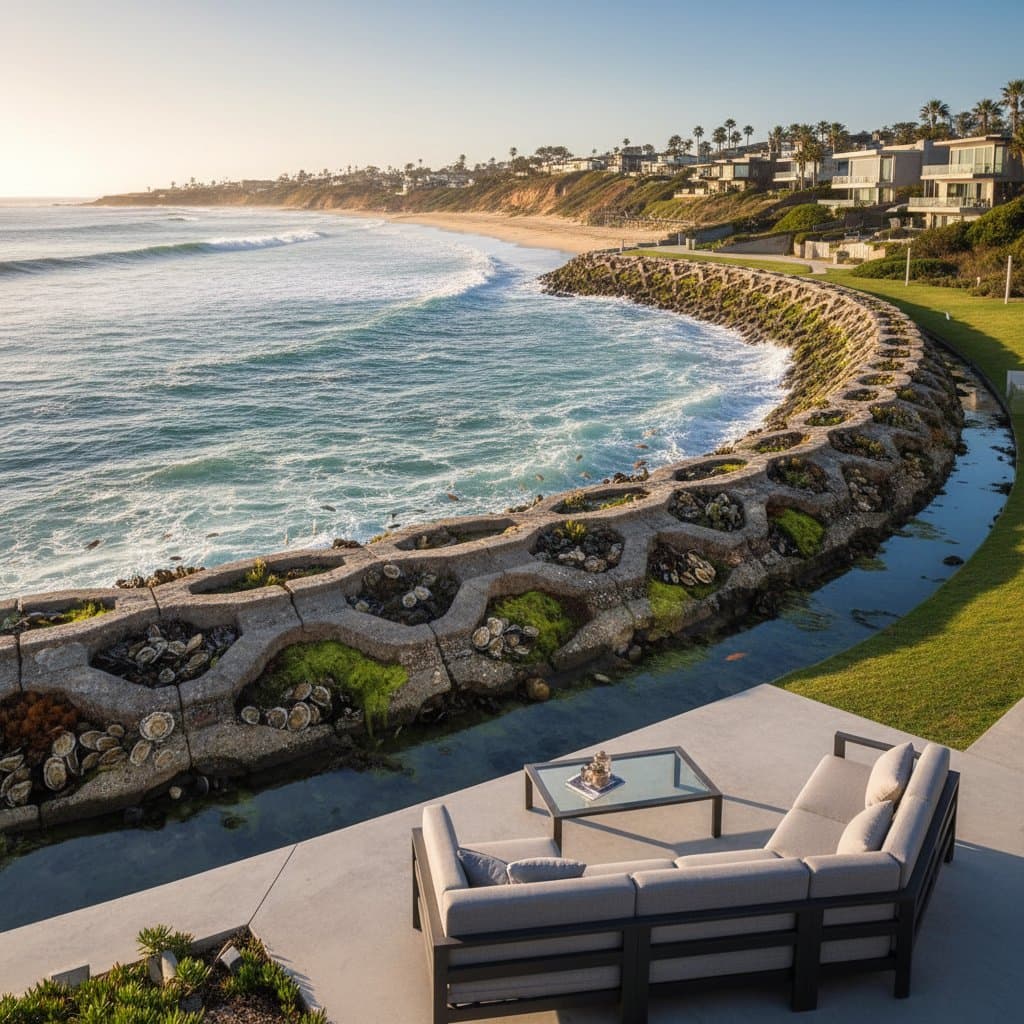
Why Living Seawalls Outperform Concrete Barriers
Coastal living in San Diego offers many advantages, yet property owners near the water face ongoing erosion challenges. Traditional concrete seawalls appear as a reliable option, yet innovative eco-friendly alternatives are transforming shoreline protection. Living seawalls emerge as a superior, sustainable method for coastal defense, integrating scientific principles, thoughtful design, and ecological benefits into a durable framework.
Property owners often question if a living seawall can withstand natural forces. The evidence confirms that these structures effectively mitigate erosion, revive marine ecosystems, enhance water quality, and elevate the aesthetic appeal of coastlines.
Key Advantages
- Living seawalls incorporate natural materials and marine organisms to secure shorelines.
- They foster biodiversity, in contrast to the sterile surfaces of concrete walls.
- These barriers dissipate wave energy with greater efficiency.
- Maintenance expenses over time prove lower compared to conventional structures.
- They suit environmentally aware homeowners and waterfront projects.
- Customization allows adaptation to specific conditions, such as oyster reef integrations.
Limitations of Concrete Seawalls
Concrete seawalls have served as a primary tool against coastal erosion for many years, yet they present significant limitations. Although they provide initial strength, these structures often exacerbate erosion over extended periods.
Specific Drawbacks
- Wave Reflection: Concrete surfaces redirect wave energy back toward the sea, leading to intensified scouring at the base and accelerated seabed erosion.
- Habitat Disruption: The smooth finish of concrete offers no attachment points for marine species, resulting in a lifeless underwater zone.
- Ongoing Repairs: Exposure to saltwater causes cracking and corrosion, necessitating regular interventions.
- Visual Impact: The stark, gray appearance of these barriers clashes with the organic charm of coastal landscapes.
Concrete seawalls address immediate threats but fail to sustain overall shoreline vitality. They temporarily restrain water but neglect broader ecological health.
Living Seawalls Versus Concrete Seawalls
| Feature | Living Seawall | Concrete Seawall |
|---|---|---|
| Primary Material | Natural rock, oyster shells, modular panels | Solid concrete |
| Wave Energy Absorption | High | Low |
| Biodiversity Support | Excellent | Poor |
| Maintenance Needs | Low to moderate | High |
| Visual Appeal | Natural and adaptive | Industrial and static |
| Longevity | Self-reinforcing via marine growth | Degrades over time |
This comparison highlights how living seawalls deliver multifaceted benefits, from environmental enhancement to economic efficiency.
Evaluating Costs and Maintenance
The expense of installing a living seawall varies based on project scale, site specifics, material selections, and design intricacies. Although upfront costs may exceed those of basic concrete installations, sustained savings and ecological gains establish superior value.
Cost Breakdown
- Small Residential Applications: Moderate pricing applies to setups using modular panels or oyster-filled bags, typically ranging from $5,000 to $15,000 depending on length.
- Medium Coastal Properties: Mid-level investments cover hybrid designs with rock and reef components, often between $20,000 and $50,000.
- Large-Scale Projects: Elevated initial outlays, such as $100,000 or more, yield reduced long-term costs through natural reinforcement.
Maintenance Advantages
Established living seawalls demand limited attention. Marine life progressively fortifies the structure and upholds its functions. Concrete alternatives, however, require patching, reinforcement, and potential rebuilding following severe weather events.
Practical Advice: Allocate an additional 20 percent of the budget for unforeseen elements like site variations or regulatory approvals.
Designing a Living Seawall for Your Property
Effective design of a living seawall demands precise planning, yet it adapts to diverse shoreline configurations. Follow these steps to initiate the process.
Step 1: Evaluate Shoreline Conditions
Determine primary erosion drivers, such as wave impacts, vessel wakes, or surge events. This analysis informs the selection of an appropriate living system.
Step 2: Engage Professionals
Collaborate with coastal engineers, marine biologists, and regulatory bodies. These experts navigate compliance issues and recommend site-compatible materials.
Step 3: Select Materials
Consider these choices:
- Oyster Shells or Reef Balls: These promote attachment and growth of marine organisms.
- Textured Concrete Panels: They offer structural integrity alongside a blended appearance.
- Native Rock and Gravel: Such elements integrate smoothly with surrounding terrain.
Step 4: Implement Layered Construction
Construct in tiers for optimal performance. The foundational layer dissipates waves, the central layer ensures stability, and the surface layer encourages biological colonization.
Step 5: Ongoing Monitoring
Post-installation, observe structural integrity and ecological progress. Clear accumulated debris, inspect perimeter erosion, and document species diversity.
Image Suggestion: Depict coastal residents examining a living seawall teeming with marine vegetation and organisms.
Common Questions About Living Seawalls
How durable is a living seawall?
Well-constructed versions endure for decades. Biological accretion enhances resilience with time.
Are permits necessary?
Yes, shoreline alterations typically require approvals. Coordinate with local agencies and conservation groups for adherence.
Is retrofitting possible for existing concrete walls?
Affirmative. Integrate textured overlays or oyster habitats to evolve them into hybrid systems.
Does it draw problematic wildlife?
It invites beneficial marine inhabitants without attracting nuisances. The focus remains on ecological equilibrium.
What about costs?
Upfront expenses surpass concrete options, yet reduced upkeep and added environmental value offset this.
Advancing Coastal Protection
Opting for a living seawall represents a strategic enhancement beyond material choices; it embodies dedication to enduring sustainability. Property security aligns with environmental stewardship. Shorelines gain robustness, purity, and vitality, evolving barriers into dynamic habitats.
Home remains unparalleled, particularly when waterfront spaces contribute to oceanic health. To safeguard your San Diego property and foster positive change, commence planning now. Consult regional specialists, investigate oyster reef integrations, and embrace solutions that prioritize life over inert defenses.