
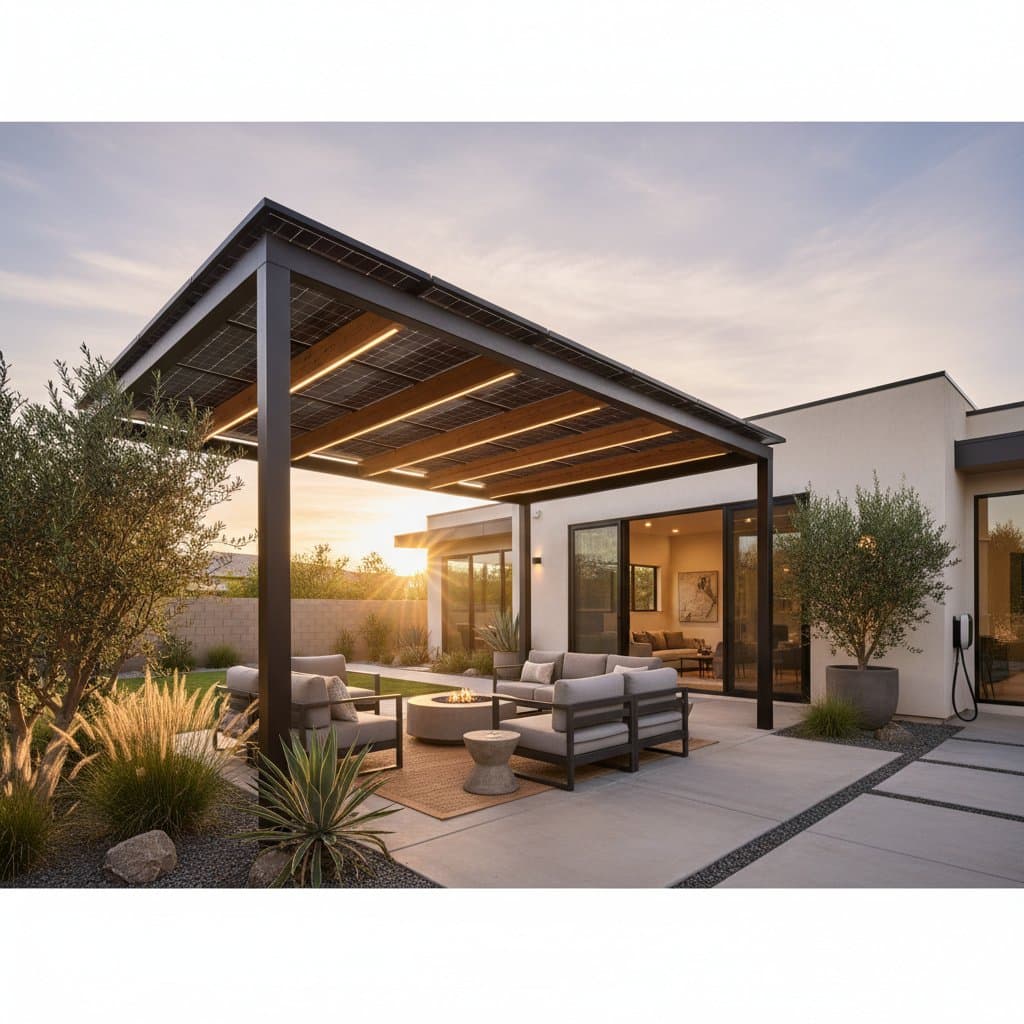
Shade That Generates Power: Solar Pergolas Explained
Imagine relaxing beneath a stylish pergola in the backyard, enjoying a cool drink while the structure quietly produces renewable energy. This is the appeal of a solar pergola. It offers shade, enhances architectural interest, and generates clean electricity simultaneously. For homeowners who prioritize design and environmental responsibility, this addition represents a significant advancement.
This guide examines all aspects of solar pergolas, including costs, benefits, installation options, and maintenance requirements. Readers will learn about pricing influences, available designs, and professional involvement. Investments range from $10,000 to $35,000, based on dimensions, materials, and energy capacity. Benefits include reduced utility expenses and an improved outdoor environment.
Homeowners considering this enhancement should obtain estimates from qualified solar pergola specialists to evaluate choices and select the best match for their property.
Cost Factors
Solar pergolas generally range from $10,000 to $35,000 in price, with an average of approximately $22,000 for a medium-sized unit that supports partial home energy demands. Multiple variables determine the total expense.
1. Size and Energy Output
Bigger pergolas accommodate additional solar panels, which yield higher wattage yet elevate expenses. A compact 10-by-10-foot model may begin at $10,000, whereas a larger 20-by-20-foot version often surpasses $30,000. To calculate needs, measure available space and estimate desired daily kilowatt-hours based on household usage patterns.
2. Materials
Aluminum and steel frameworks provide durability and require little maintenance, making them suitable for long-term outdoor exposure. Wood delivers a warm, organic appearance but demands periodic sealing to resist moisture and insects. Wood selections typically incur higher costs due to premium sourcing and ongoing preservation efforts.
3. Solar Panel Types
Monocrystalline panels command a higher price because of their superior efficiency in converting sunlight to electricity, often reaching 20 percent or more. Polycrystalline options cost less while still offering reliable performance around 15 to 18 percent efficiency. Thin-film panels suit flexible applications, such as curved roofs, and weigh less, though they generate slightly lower output per square foot.
4. Labor and Installation
Installation labor accounts for $3,000 to $8,000, varying with project intricacy. Tasks like site excavation, electrical wiring, and connection to the home inverter or storage batteries contribute to these figures. Complex integrations, such as tying into existing solar arrays, may require additional specialized expertise.
5. Permits and Location
Local governments often mandate permits for solar installations or structural builds. Regions near coastlines or prone to high winds necessitate fortified constructions, which raise material and engineering costs. Consult municipal offices early to identify any site-specific requirements.
DIY Versus Professional Installation
Individuals skilled with tools may question if constructing a solar pergola independently is viable. Such projects are feasible to a degree, yet boundaries exist for safety and effectiveness.
DIY Approach
Experienced builders can assemble the frame using basic carpentry or welding techniques. However, mounting panels, routing wires, and configuring inverters demands certification to adhere to electrical standards and preserve manufacturer warranties. Allocate three to five weekends for framing, panel attachment, and testing.
Professional Installation
Certified installers manage the entire process, from foundation to electrical hookup. They guarantee structural stability, regulatory adherence, and hazard prevention. Although labor fees span $3,000 to $8,000, professionals minimize errors and accelerate completion.
Recommendation
Engage experts for any pergola linked to the home electrical grid to avoid risks and ensure incentives eligibility. Standalone or off-grid configurations permit greater DIY involvement, provided users verify local codes.
Maintenance and Longevity
Installed solar pergolas demand limited routine care. Panels endure 25 years or longer under normal conditions, and the framework withstands decades with attentive oversight.
Key Maintenance Practices
- Wipe panels biannually with a solution of mild detergent and lukewarm water, using a soft brush to remove debris without scratching surfaces.
- Examine wiring connections each year for corrosion or fraying, particularly after storms.
- Apply protective sealants to wooden elements every two to three years to shield against UV damage and rot.
- Check and secure all bolts and joints following strong winds or seismic activity to maintain stability.
Consistent upkeep ensures sustained energy production and preserves the pergola as a prominent yard feature.
Essential Considerations Before Installation
Evaluate how a solar pergola aligns with property features and daily routines prior to proceeding.
Climate and Sun Exposure
Properties receiving plentiful direct sunlight maximize returns. Overcast or tree-shaded locations benefit from advanced panels that perform well in diffuse light, though output may decrease by 20 to 30 percent.
Design Preferences
Sleek aluminum suits modern residences, blending seamlessly with clean lines. Stained or natural wood evokes traditional charm, harmonizing with cottage-style homes. Sample materials in person to confirm compatibility with existing landscaping.
Energy Objectives
Determine if the goal involves supplementing minor loads, like lighting, or integrating comprehensively with home systems. This choice dictates panel count and inverter capacity, potentially requiring a professional energy audit.
Regulatory Compliance
Review zoning ordinances and community association policies regarding structure dimensions and solar additions. Certain districts cap heights at 12 feet or mandate aesthetic reviews to preserve neighborhood character.
Financial Return
Initial outlays up to $35,000 recoup through bill reductions averaging $1,000 annually, alongside tax credits. These installations elevate home resale value by 3 to 5 percent and enhance visual allure.
Frequently Asked Questions
How Much Power Does a Solar Pergola Produce?
Standard configurations generate 3 to 7 kilowatts, sufficient to cover 30 to 50 percent of average household consumption. Output varies with panel quality and annual sunlight hours, typically 4 to 6 peak sun hours daily in sunny climates.
Is a Building Permit Required?
Yes, most jurisdictions demand approvals for both the structure and solar elements. Contractors often navigate paperwork, inspections, and code verifications to streamline the process.
Can It Power Outdoor Features Like Kitchens or Pumps?
Absolutely. Proper sizing and dedicated circuits enable operation of grills, refrigerators, lights, or circulation pumps, reducing reliance on grid power during peak usage.
Does the Investment Justify the Expense?
For those seeking aesthetic and ecological advantages, it does. Savings on energy, combined with shade utility and value appreciation, achieve payback in 7 to 10 years.
What Is the Installation Timeline?
Expert teams complete most projects in 3 to 7 days, factoring in weather and scale. Independent efforts extend over multiple weekends, including curing times for foundations.
Steps to Integrate Solar Shade Into Your Outdoor Space
A solar pergola elevates a standard yard into an intelligent, power-producing haven. It merges utility with elegance, creating a shaded area that supports household energy needs.
Begin with a site survey to gauge sunlight and dimensions, then establish a realistic budget. Secure bids from licensed providers to compare specifications and timelines. Through deliberate preparation, future gatherings can occur beneath a feature that cools the air and energizes the home with sustainable power.