
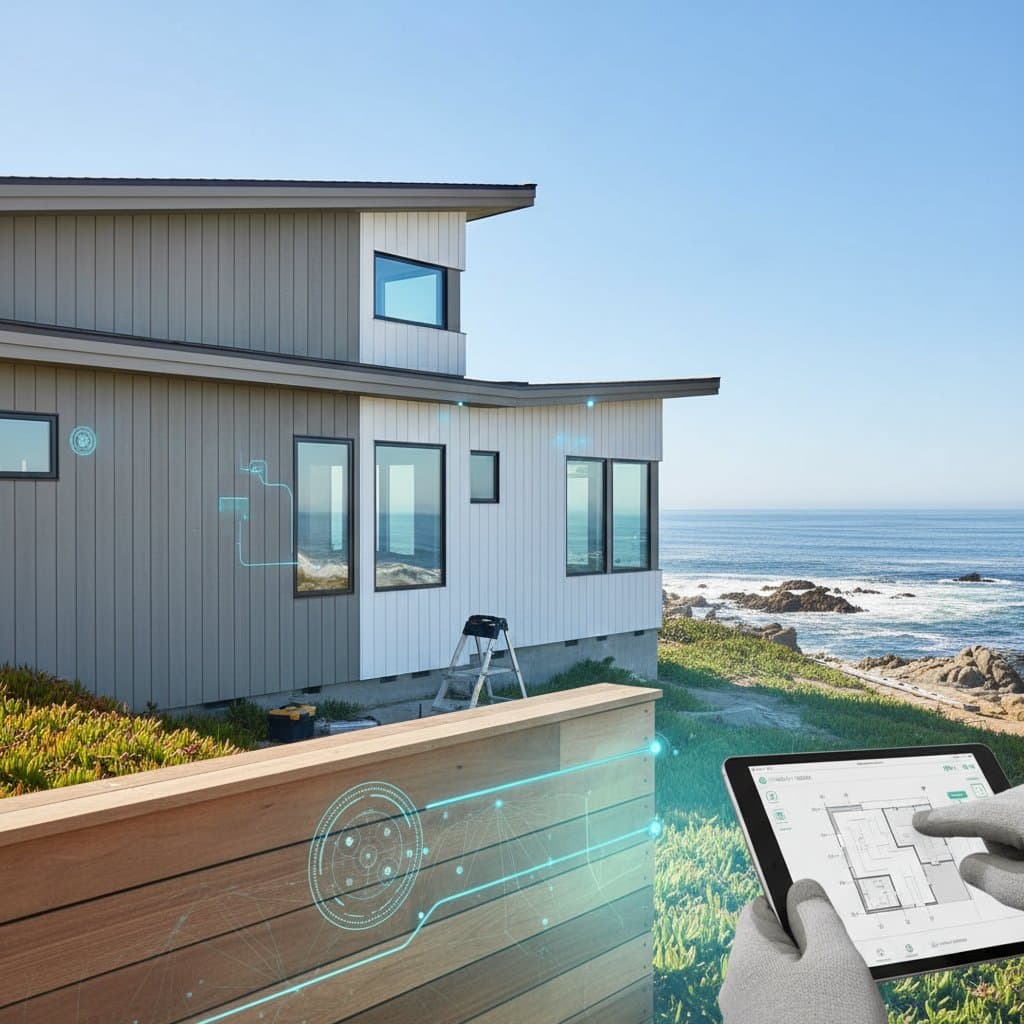
Protect Your Home from Rot with Smart Moisture Siding
Picture a serene morning in your coastal home, with the Pacific Ocean breeze carrying a hint of salt through the air. The sun illuminates the exterior, yet a subtle soft spot on the siding or a discoloration on the trim reveals an underlying issue. Wood rot, fueled by persistent moisture, operates silently and can escalate rapidly in hidden areas. In regions like San Diego, where humidity and salt exposure are constant, smart moisture siding emerges as an innovative solution to safeguard structures.
This article details the functionality of smart moisture siding, associated costs, available types, and considerations for installation. Readers gain insights into cost-saving measures and maintenance practices to ensure long-term performance.
Key Takeaway: Installation of smart moisture siding for an average home ranges from $8,000 to $25,000, influenced by home size and material selection. These systems identify trapped moisture early, averting rot and mold that could lead to extensive repairs. For professional assistance, obtain estimates from specialists experienced in coastal smart siding applications.
Cost Factors
The expense for smart moisture siding typically falls between $8,000 and $25,000 for a standard home. This figure encompasses materials, labor, and sensor integration, with an average of approximately $14,000. Variations arise from factors such as square footage, material type, sensor setup, and local labor costs.
Key Cost Breakdown
- Vinyl or Composite Smart Siding: $5 to $9 per square foot
- Fiber Cement or Engineered Wood: $9 to $14 per square foot
- High-End Systems with Integrated Sensors: $15 to $22 per square foot
Influences on Cost
- Material Selection: Options like fiber cement or engineered wood incur higher costs yet offer superior resistance to coastal conditions compared to vinyl.
- Sensor Integration: Embedded humidity and moisture sensors contribute an additional $1,500 to $3,000 to the total.
- Labor and Installation Demands: Projects involving multiple stories or irregular surfaces demand extended time and expertise.
- Permits and Inspections: Certain jurisdictions mandate inspections for moisture barriers, with fees ranging from $150 to $400.
- Removal of Existing Siding: Dismantling old siding and addressing substructure repairs can increase expenses by $1,000 to $3,000.
Project Examples
- Small Coastal Bungalow (1,200 Square Feet): $9,000 to $13,000
- Two-Story Residence (2,000 Square Feet): $15,000 to $20,000
- Large Custom Home (3,000+ Square Feet): $22,000 to $28,000
Such investments yield returns through diminished maintenance needs and avoidance of moisture-related structural failures.
Fiber Cement Smart Siding
Fiber cement siding combines cement, sand, and cellulose fibers to create a robust material resistant to moisture, heat, and pests. Integration with smart sensors enables detection of water penetration behind the panels, providing timely alerts.
Ideal For: Properties in environments with elevated humidity or salt concentrations.
Advantages:
- Superior fire resistance
- Exceptional longevity in coastal settings
- Reduced maintenance requirements over time
Disadvantages:
- Weight necessitates professional handling during installation
- Elevated initial expense
Composite and Polymer Siding
Composite siding merges polymers, recycled wood fibers, and resins for enhanced durability. When equipped with smart detection features, it delivers advanced moisture management capabilities.
Ideal For: Sustained, minimal-upkeep shielding in coastal areas.
Advantages:
- Resistance to fading, cracking, and decay
- Strong thermal insulation qualities
- Support for app-integrated sensor oversight
Disadvantages:
- Fewer options for color variations
- Premium pricing relative to vinyl alternatives
Strategies to Reduce Costs
Implementing smart siding represents a significant financial commitment, yet targeted approaches can minimize outlays while preserving quality.
- Integrate Multiple Upgrades: Align siding replacement with other exterior tasks, such as window updates or painting, to consolidate labor expenses.
- Targeted Sensor Placement: Limit smart features to vulnerable areas, including north-facing elevations or ground-level sections.
- Opt for Balanced Materials: Fiber cement strikes an effective compromise between affordability and resilience.
- Seek Off-Peak Pricing: Contractors often provide reductions during less busy seasons.
- Prioritize Upkeep: Routine cleaning and sealing prolong material life, delaying the need for full replacements.
Maintenance Practices for Longevity
Although smart moisture siding mitigates rot risks, consistent care remains essential for optimal function. Adopt these routines to sustain performance across years.
- Conduct Inspections: Examine for cracks, distortions, or deteriorated caulking biannually.
- Perform Gentle Cleaning: Apply mild soap with a soft brush to eliminate dirt and salt deposits; refrain from pressure washing.
- Verify Sensor Accuracy: Monitor data monthly and adjust calibrations as needed for reliable alerts.
- Apply Protective Finishes: Refresh paint or sealant on exposed or chipped areas promptly.
- Manage Surroundings: Maintain distance from vegetation to promote ventilation and limit moisture accumulation.
These measures extend the siding's service life to decades and ensure sensor precision.
Frequently Asked Questions
How Does Smart Moisture Siding Identify Issues? Embedded sensors within the system gauge humidity between panels and underlying structures. Alerts transmit to a mobile device or central unit when levels exceed safe parameters, enabling intervention prior to rot development.
Is a Special Permit Required for Installation? Standard exterior renovation permits suffice in most locations. Coastal proximity or homeowners association rules may impose extra stipulations; confirm with local authorities prior to commencement.
Can Sensors Be Added to Existing Siding? Retrofit sensors install behind current panels or within wall spaces, offering protection for homes with recent siding updates.
What Is the Expected Lifespan of Smart Moisture Siding? Materials endure 25 to 50 years, with maintenance and periodic refinishing enhancing durability. Proactive monitoring prevents hidden damage that could abbreviate service.
Does Smart Siding Justify the Cost for Coastal Properties? Yes, in climates prone to humidity and salt, moisture poses a primary threat to integrity. Real-time safeguards avert substantial repair costs and uphold property value.
Steps to Install Smart Moisture Siding
Begin by assessing your home's exposure to moisture through a professional evaluation. Select materials suited to coastal demands, then secure multiple contractor bids for transparent pricing. Proceed with installation during favorable weather to optimize adhesion and sensor setup. Monitor the system post-installation to confirm seamless operation, securing your investment in a resilient exterior.