
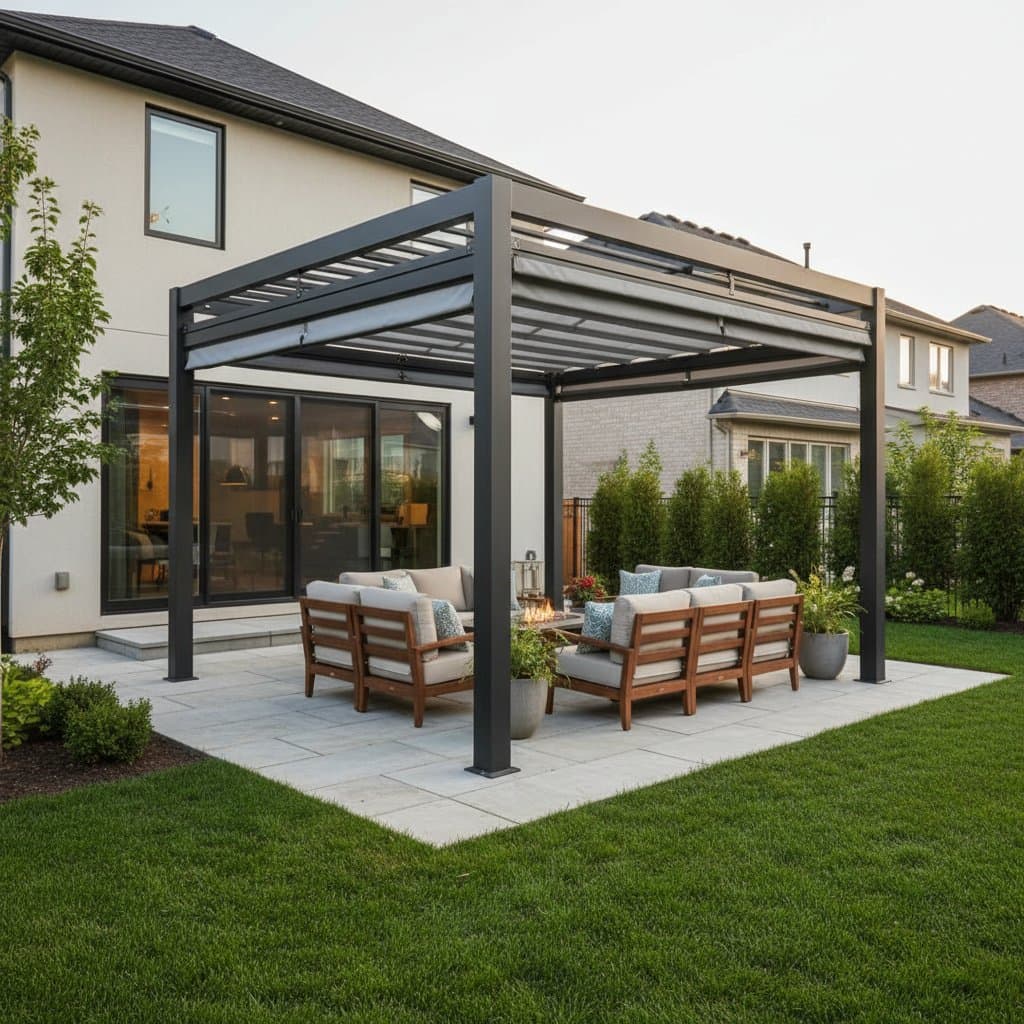
Invest $8,000 in a Pergola for a $15,000 Home Value Boost
A thoughtfully designed backyard elevates daily living and influences potential buyers' perceptions of a property. Among outdoor enhancements, a pergola stands out for delivering substantial returns on investment. Allocating approximately $8,000 to a pergola project can generate an estimated $15,000 increase in home value, positioning it as both an aesthetic improvement and a prudent financial move.
For those contemplating a pergola addition, this guide delineates expenditure breakdowns, cost-influencing elements, return-maximization techniques, and the choice between DIY efforts and professional services.
Cost Breakdown by Material
Material selection shapes initial expenses and ongoing upkeep requirements. The following table outlines popular pergola materials with key attributes.
| Material | Average Cost per Sq. Ft. | Durability | Maintenance Level | Aesthetic Appeal |
|---|---|---|---|---|
| Pressure-Treated Wood | $25 - $35 | Moderate | High | Classic, natural appearance |
| Cedar or Redwood | $40 - $60 | High | Moderate | Warm tones, decay resistance |
| Aluminum | $45 - $65 | Very High | Low | Sleek, contemporary style |
| Vinyl | $35 - $55 | High | Very Low | Clean lines, minimal care |
| Steel | $50 - $80 | Very High | Moderate | Industrial durability |
Wood pergolas provide enduring charm, though they demand periodic staining or sealing. Aluminum and vinyl alternatives require little maintenance, suiting humid or coastal environments. Select based on financial constraints, preferred aesthetics, and commitment to upkeep.
Elements Affecting Total Expenses
Multiple aspects determine pergola costs and resultant property value.
- Dimensions and configuration. Expansive or intricate designs demand additional materials and labor.
- Material choices. High-end woods or metals involve greater initial outlays yet offer extended longevity.
- Attachment style. Structures linked to the home necessitate integration with existing architecture, whereas freestanding units require separate foundations.
- Regulatory approvals. Local authorities may mandate permits for builds surpassing height or area thresholds.
- Preparation of the site. Tasks such as ground leveling, footing installation, or paver laying contribute to expenses.
- Supplementary features. Elements like illumination, ceiling fans, privacy panels, or retractable shades each incur hundreds of dollars.
Grasping these facets enables accurate budgeting prior to soliciting contractor bids.
Strategies to Reduce Pergola Expenses
Achieve savings while upholding quality through meticulous planning.
- Obtain at least three comprehensive bids from certified contractors.
- Undertake preliminary tasks like site preparation or finishing coats independently, reserving complex assembly for experts.
- Favor economical options such as pressure-treated pine or vinyl to preserve attractiveness at lower prices.
- Pursue straightforward designs with linear beams and basic posts over ornate or curved variants.
- Schedule installation during less busy seasons when contractors propose reduced fees.
- Integrate the project with complementary work, such as patio renewal or garden enhancements, to secure volume discounts.
- Defer nonessential additions like lighting or enclosures until after core construction.
Such approaches typically lower overall costs by 10 to 25 percent, aligning expenditures with planned limits.
Pitfalls to Sidestep in Pergola Projects
Steering clear of frequent errors preserves resources and secures sustained benefits.
- Overlooking approvals. Unauthorized builds risk penalties or demolition mandates.
- Neglecting base stability. Secure footings prove essential in regions prone to wind or irregular terrain.
- Failing to treat materials adequately. Exposed wood deteriorates rapidly without protective coatings against dampness.
- Selecting suboptimal locations. Position the structure to capture balanced sunlight and shelter, clear of root systems or water runoff paths.
- Misjudging scale. Undersized units appear disproportionate, while excessive sizes dominate the landscape.
- Omitting upkeep schedules. Routine inspections and treatments prolong the lifespan of wooden and metallic components.
Addressing these during initial planning averts expensive alterations down the line.
Essential Inquiries for Prospective Contractors
Prior to committing, pose these questions to identify a reliable collaborator.
- Do you hold licensing and insurance specific to outdoor constructions?
- Can you furnish a itemized written proposal covering materials and labor?
- What foundation method do you recommend for this pergola?
- Will you manage permit applications and regulatory inspections?
- What duration do you anticipate from commencement to completion?
- Does your service include guarantees for labor or supplied materials?
- May I review images or client testimonials from comparable installations?
These inquiries safeguard finances, promote transparency, and facilitate informed comparisons.
Common Queries on Pergola Installations
How durable is a pergola?
With proper care, a pergola endures 10 to 20 years or longer, varying by material. Aluminum and vinyl variants frequently surpass 20 years, whereas wood types benefit from refinishing at intervals to counter elemental wear.
Is a building permit required for a pergola?
Many jurisdictions demand permits for pergolas exceeding defined heights or affixed to residences. Consult local ordinances early to prevent infractions or project halts.
Does a pergola enhance resale value?
Indeed, properties featuring inviting outdoor amenities attract quicker sales at premium prices. A quality pergola may elevate value by $10,000 to $15,000, contingent on execution and integration.
Is attaching a pergola to the home feasible?
Attached designs prevail, fostering fluid indoor-outdoor connections. Proper sealing and anchoring prevent moisture entry or structural compromise.
Which material suits coastal or moist areas best?
Aluminum or vinyl excels in such conditions, resisting rust, pests, and humidity. Treated wood remains viable with rigorous sealing protocols.
What dimensions suit a pergola?
Target at least 12 by 12 feet for seating or dining areas. This accommodates typical furniture arrangements while permitting circulation and ventilation.
Can lighting or fans integrate with a pergola?
Yes, incorporate recessed lights, string fixtures, or mounted fans during construction or as retrofits. Electrical planning ensures safe, effective enhancements that extend usability into evenings.
Sustaining Pergola Worth Over Time
- Perform yearly cleanings to eliminate accumulations of leaves, mold, and grime using gentle detergents.
- Apply sealants or fresh coats to wood surfaces biennially to ward off decay and preserve hues.
- Examine connections and hardware periodically, adjusting or substituting elements for firmness.
- Update surrounding greenery or hardscaping to amplify the pergola's integration and allure.
- Introduce enhancements like drapes, shades, or illumination incrementally as funds permit.
Steps to Launch Your Pergola Upgrade
Begin by evaluating your yard's layout and lifestyle needs to define pergola specifications. Secure multiple professional assessments to refine cost projections and timelines. Proceed with selections that balance immediate enjoyment and future resale advantages, transforming your outdoor area into a valuable asset.