
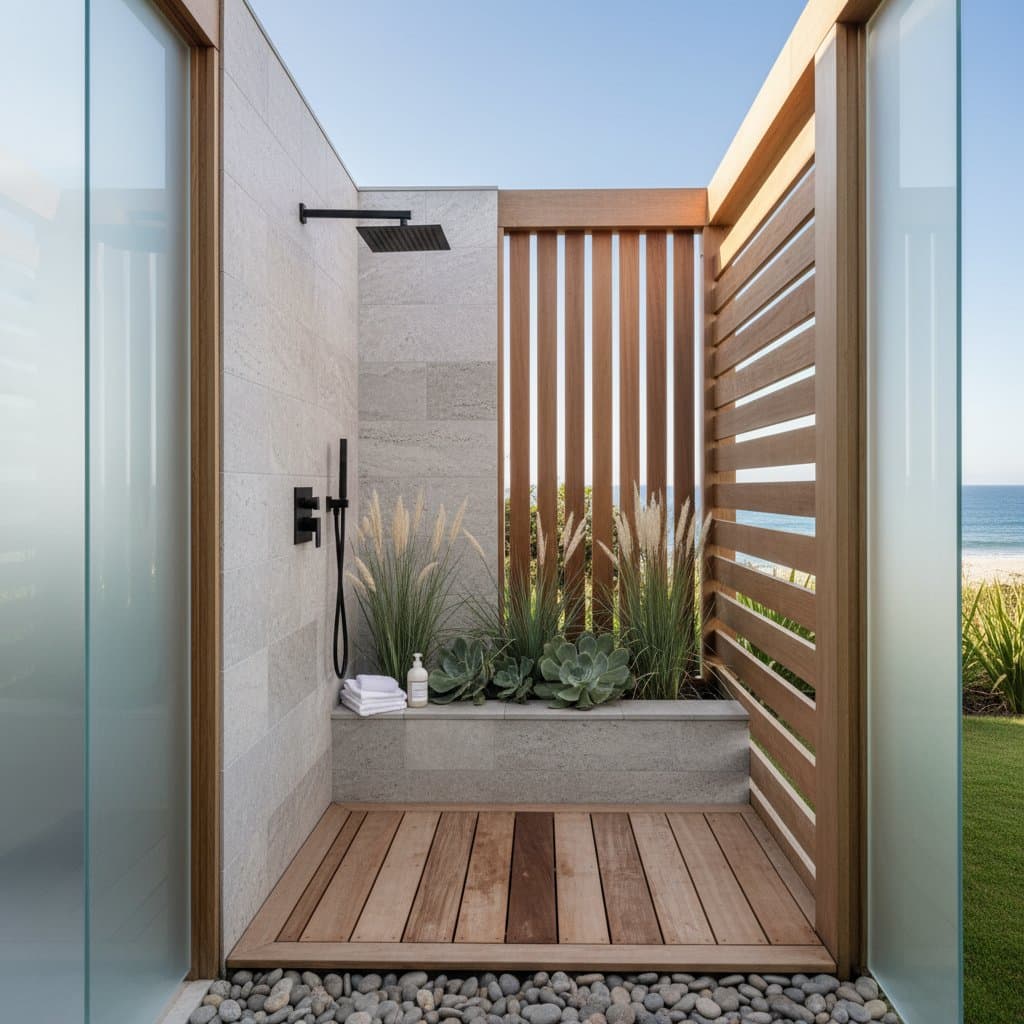
Why Outdoor Showers Suit Coastal Living
Outdoor showers offer a practical solution for homes near the sea. They provide a quick rinse after beach outings, reducing indoor mess from sand and salt. In regions like San Diego, where the climate supports year-round outdoor use, these features enhance daily routines while elevating property aesthetics.
Homeowners appreciate the seamless blend of nature and convenience. An outdoor shower creates a private oasis that extends living spaces beyond walls. This addition appeals to those who value wellness and environmental harmony in their surroundings.
The Value Proposition for Your Property
Investing in an outdoor shower can increase home resale value by up to 5 percent in coastal markets. Real estate experts note that unique amenities like these differentiate listings in competitive areas. Buyers seek properties that promise an effortless lifestyle attuned to the outdoors.
Beyond financial returns, the luxury aspect fosters relaxation. Imagine stepping from the surf directly into a refreshing shower under the sun. Such features turn ordinary backyards into resort-like retreats, improving overall quality of life.
The installation aligns with sustainable practices. Many designs incorporate low-flow fixtures that conserve water, a priority in drought-prone coastal zones. This eco-friendly approach not only lowers utility bills but also attracts environmentally conscious purchasers.
Breaking Down the $3,000 Budget
A $3,000 allocation covers essential components for a functional outdoor shower. Base costs include plumbing connections at $500 to $800, depending on distance from the main line. Fixtures such as showerheads and valves range from $200 to $500 for durable, corrosion-resistant models suited to salty air.
Enclosure materials add another $800 to $1,200. Options like teak wood or fiberglass panels withstand humidity without warping. Flooring choices, such as pebble stone or non-slip tiles, cost $300 to $600 and ensure safety in wet conditions.
Labor expenses vary by location and complexity. Professional installation typically accounts for $500 to $1,000, including permits if required by local codes. Homeowners who opt for DIY save here but must possess basic plumbing skills to avoid costly errors.
- Assess site: Evaluate water access and drainage.
- Select materials: Prioritize weatherproof options.
- Budget buffer: Allocate 10 percent for unexpected adjustments.
Design Ideas to Match Your Style
Minimalist designs feature wall-mounted showerheads with simple bamboo screens. These setups cost under $2,000 and integrate neatly into existing patios. The clean lines complement modern coastal architecture without overwhelming small spaces.
For a spa-like experience, consider fully enclosed units with glass panels and built-in benches. Prices approach $3,000, including rain-style heads for a gentle cascade. Add solar heating for $400 more to maintain warmth without grid reliance.
Rustic options use reclaimed wood and river rock bases. These evoke a natural vibe ideal for beach cottages. Customization allows integration of storage hooks for towels, enhancing usability at a modest additional expense.
- Wall-mounted: Space-efficient for urban lots.
- Enclosed: Privacy-focused for family homes.
- Freestanding: Versatile for garden placements.
Installation: DIY or Professional?
DIY projects suit handy individuals with plumbing experience. Begin by mapping the layout to ensure proper slope for drainage, aiming for a 1/4-inch drop per foot. Connect to existing hot and cold lines using PEX tubing, which resists corrosion better than copper in marine environments.
Secure the frame with concrete anchors for stability against winds. Test all connections for leaks before finalizing the enclosure. Completion times average two weekends, assuming access to tools like pipe cutters and levels.
Professional services guarantee compliance with building codes, especially in seismic areas. Contractors handle permits and inspections, preventing future issues. Expect a one-day install for standard setups, with warranties on workmanship lasting one to five years.
Compare options:
- DIY pros: Cost savings and personalization.
- Pro pros: Expertise and code adherence.
- Hybrid: DIY design with pro plumbing.
Maintenance for Longevity
Regular upkeep extends the life of your outdoor shower to 15 years or more. Rinse fixtures weekly to remove salt buildup, using a vinegar solution for stubborn deposits. Inspect seals and caulking quarterly, reapplying silicone as needed to block moisture intrusion.
Winterize in cooler climates by draining lines and covering the unit. Choose materials like stainless steel hardware to minimize rust. Annual professional tune-ups cost $100 to $200 and catch issues early.
Store accessories indoors during off-seasons to prevent fading. These habits preserve both appearance and function, ensuring the feature remains a valued asset.
Realize the Benefits in Your Seaside Sanctuary
An outdoor shower transforms routine tasks into moments of indulgence. It boosts property appeal, supports sustainable living, and fits within a modest budget. Coastal residents discover renewed appreciation for their surroundings through this simple yet impactful upgrade.
Plan your project with confidence, drawing on these insights for success. The result is a home that reflects personal style while promising enduring enjoyment and financial upside.