
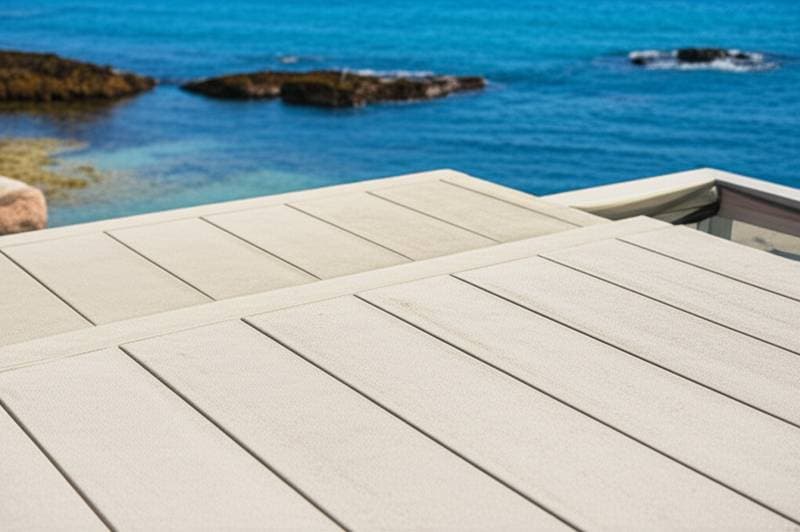
EPA's 2025 Regulations Require Coral-Safe Concrete for Coastal Decks
Coastal construction presents unique hurdles, including exposure to corrosive saltwater and the risk of pollutants entering nearby waters. The Environmental Protection Agency has introduced regulations effective in 2025 that transform these practices. Builders and property owners now must incorporate coral-safe concrete, a formulation engineered to minimize environmental harm while upholding structural integrity.
Residents along the San Diego shoreline or similar coastal regions face direct implications from these changes. Grasping the composition of coral-safe concrete, its mechanisms, and effects on project planning enables adherence to standards and promotes ecological stewardship.
Key Provisions
- Coral-safe concrete becomes mandatory for new coastal decks and significant renovations.
- Regulations target diminished chemical discharge that threatens coral reefs and aquatic organisms.
- Property owners select verified formulations and prepare for adjusted financial planning.
- Performance characteristics align closely with conventional concrete, enhanced by ecological advantages.
- Construction teams adhere to EPA-endorsed procurement and record-keeping protocols.
Rationale Behind the EPA Regulations
These EPA guidelines address threats to coral ecosystems and ocean health stemming from building activities. Coral reefs function as vital underwater forests, sustaining diverse species and buffering coastlines against wave action.
In locales such as San Diego, proximity to bays and beaches amplifies issues like sediment buildup and toxin release from concrete. Such factors gradually impair coral formations extending far into the sea. The mandates seek to mitigate these effects by enforcing the use of coral-safe substances in decks, seawalls, and adjacent installations, verified via rigorous evaluation methods.
Ecological Advantages
- Enhanced vitality in ocean habitats through lowered toxin levels.
- Purer shoreline waters fostering populations of fish, seagrasses, and coral recovery.
- Adoption of enduring building methods aligned with conservation objectives.
When designing a deck, request from the contractor the EPA certification for the concrete blend prior to commencement of pouring.
Financial Considerations for Property Owners
Projects utilizing coral-safe concrete incur marginally elevated expenses compared to standard alternatives, attributable to unique components and verification procedures. Expect an increase of 5 to 10 percent in material and documentation costs.
Cost Projections
| Project Scale | Typical Cost Range |
|---|---|
| Compact patio deck (200 square feet) | $3,000 to $4,500 |
| Moderate deck (400 square feet) | $6,000 to $8,500 |
| Extensive coastal deck (600+ square feet) | $9,000 to $12,000 |
Estimates encompass materials, workmanship, and certification for EPA compliance.
Although initial outlays rise modestly, enduring gains prove worthwhile. Coral-safe concrete demonstrates superior resilience against saline corrosion, thereby prolonging deck durability and curtailing upkeep expenditures over time.
Obtain a comprehensive quote that itemizes the certification expense distinctly to facilitate precise comparisons among proposals.
Options for Installation: Self-Directed or Expert-Led
A modest deck endeavor may appear suitable for independent execution, yet coral-safe concrete demands precise expertise and meticulous application.
Advantages and Drawbacks
| Method | Advantages | Drawbacks |
|---|---|---|
| Self-Directed | Reduced labor expenses, sense of accomplishment | Potential for regulatory violations, flawed preparation, absence of validation |
| Licensed Professional | Guaranteed adherence, skilled execution, potential warranties | Elevated initial investment |
For the majority of property owners, engaging a specialist versed in EPA directives represents the prudent and secure approach.
Image caption: A professional applying a protective sealer formulated for coral safety to a completed coastal deck.
Enduring Advantages for Properties and Ecosystems
The transition to coral-safe concrete transcends mere obligation. It constitutes a proactive measure in safeguarding San Diego's shoreline allure for subsequent generations.
Anticipated Gains
- Diminished ongoing maintenance thanks to enhanced tolerance for salt and humidity.
- Elevated real estate worth stemming from regulatory alignment and green credentials.
- Assurance that the structure contributes to regional habitat protection.
To deepen understanding, consider the formulation process. Coral-safe concrete incorporates low-alkalinity cements and non-toxic aggregates, which prevent the release of substances like hydroxides that elevate ocean pH levels and stress coral polyps. Testing involves simulated seawater exposure to confirm minimal leaching, ensuring the mix withstands coastal conditions without ecological compromise.
Compliance extends beyond material selection. Property owners should verify that contractors hold current EPA training certifications and maintain logs of material sourcing. Local authorities in San Diego may conduct spot inspections during construction, so scheduling these in advance avoids delays.
For renovations, evaluate existing structures through professional assessments. If replacement proves necessary, partial retrofits with coral-safe overlays can bridge the gap toward full compliance, though new builds offer the most straightforward path.
Common Inquiries
What defines coral-safe concrete?
This variant employs substitute binding agents and supplements that curb the discharge of chemicals into marine environments. It preserves load-bearing capacity while shielding aquatic life from detrimental effluents.
Do these requirements extend solely to ocean-adjacent sites?
Affirmative. Provisions govern locations within defined coastal boundaries where drainage might access ocean realms. Structures farther inland remain exempt.
Is it possible to render an established deck coral-safe via sealing?
Current decks benefit from applications of sealants designed for coral safety, which lessen pollutant output. Full EPA endorsement, however, necessitates compliant base concrete composition.
What is the service life of coral-safe concrete?
With appropriate placement and care, it endures equivalently to traditional types, frequently exceeding 25 years amid varying weather and site exposures.
Do commercial sites fall under these mandates?
Indeed. Residential and business coastal developments alike must implement coral-safe specifications for fresh decks, patios, and comparable features.
How can one locate certified suppliers in San Diego?
Seek providers registered with the EPA's approved vendor list, available through regional environmental offices. Confirm batch-specific certifications accompany deliveries to ensure traceability.
Steps to Implement Compliant Coastal Construction
Envisioning mornings with ocean views from a new deck now integrates ocean guardianship. Select coral-safe concrete and collaborate with informed experts to satisfy EPA criteria while sustaining the landscapes that define seaside residence.
Initiate by consulting contractors, demanding proof of certification, and organizing for supplies and reviews. This preparation not only fulfills legal duties but also amplifies the joy of coastal living through responsible choices.