
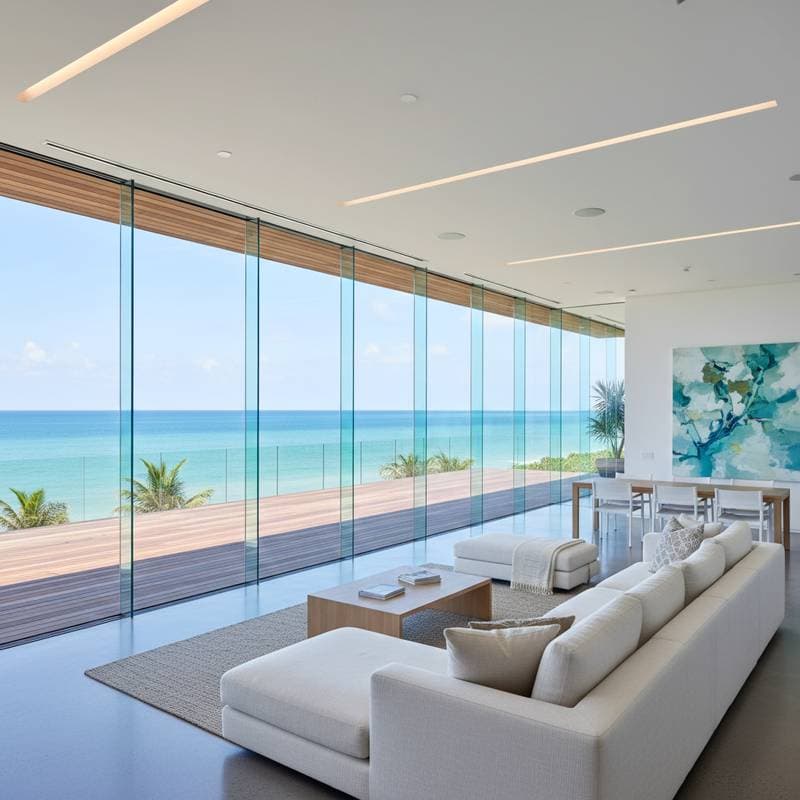
Impact Glass Walls: Seamless Coastal Home Upgrades
Coastal environments offer breathtaking scenery yet pose significant challenges through salt exposure, high humidity, and relentless sun. Homeowners seek solutions that safeguard structures while preserving expansive views. Impact glass walls provide this balance by merging clear visibility with robust durability, creating airy interiors resilient to harsh conditions.
This resource details installation essentials, including pricing ranges, customization possibilities, workforce expenses, and budget optimization techniques. Readers gain practical knowledge to plan effectively, allocate funds, and realize enduring enhancements to their properties.
Average Cost of Impact Glass Walls
Impact glass walls typically cost between $700 and $1,400 per linear foot for complete, storm-resistant setups that encompass materials and installation. Most projects average $950 per linear foot. For a 20-foot span, expenses fall between $14,000 and $28,000, varying with customization levels and framing selections.
| Project Type | Typical Total Cost | Cost per Linear Foot | Description |
|---|---|---|---|
| Small opening (10 ft) | $8,000 - $12,000 | $800 - $1,200 | Suited for patios or kitchen areas |
| Medium opening (20 ft) | $14,000 - $28,000 | $700 - $1,400 | Standard for living room extensions |
| Large opening (30+ ft) | $25,000 - $45,000+ | $750 - $1,500 | Tailored for expansive vistas |
These figures incorporate laminated glass engineered for impact resistance paired with frames optimized for seaside durability.
Cost by Material and Frame Type
Selections in materials directly affect pricing, longevity, and upkeep demands. Aluminum leads in popularity for seaside residences, while alternatives like steel, wood-clad designs, and composites appeal for varied styles.
| Frame Material | Average Cost per Linear Foot | Durability | Maintenance | Aesthetic Appeal |
|---|---|---|---|---|
| Aluminum | $700 - $1,200 | Excellent | Low | Modern, streamlined profiles |
| Wood-Clad Aluminum | $900 - $1,400 | Very good | Moderate | Organic, inviting warmth |
| Steel | $1,200 - $1,800 | Exceptional | Low | Bold, minimalist edges |
| Composite | $750 - $1,250 | Very good | Low | Versatile, economical blend |
Aluminum excels in resisting corrosion and supporting lightweight assemblies ideal for coastal use. Steel provides superior reinforcement at higher expense. Wood-clad variants soften interiors but demand periodic treatments against dampness.
Labor Costs
Workforce expenses represent 25 to 40 percent of overall project budgets. Accurate placement and secure sealing prove critical for sustained reliability, necessitating skilled professionals.
- Standard installation: $150 to $250 per linear foot
- Custom engineering or retrofits: $300 to $400 per linear foot
- Permitting and inspections: $500 to $1,500 overall
Coastal regulations elevate rates through rigorous wind standards. Structural adjustments, such as adding headers, add $2,000 to $6,000 for design and fortification.
Factors That Influence Total Cost
Multiple variables adjust project pricing upward or downward.
- Span dimensions and panel arrangements (sliding, folding, fixed)
- Glass attributes like thickness, shading, and energy-efficient layers
- Frame composition and surface treatments
- Regional storm criteria and impact classifications
- Current building integrity and reinforcement necessities
- Specialized components or motorized operations
- Site access, particularly for elevated placements
These elements interconnect, so contractors must conduct site visits for precise quotations.
Types of Impact Glass Wall Systems
Configurations vary to match aesthetic and practical needs.
Sliding Panels
Panels move along tracks, compacting to sides for unobstructed access. This setup suits broad coastal apertures with available floor space, delivering a polished, modern aesthetic.
Folding (Bi-Fold) Panels
Accordion-style folding permits full-wall openings with little interference. Such designs foster fluid indoor-outdoor connections, enhancing patios and waterfront areas.
Fixed or Picture Panels
Stationary installations maximize resilience and ease of care. Though non-operable, they ensure striking scenery and effective thermal barriers.
Pocket or Disappearing Systems
Panels retreat into hidden pockets for uninterrupted flow. Premium pricing accompanies their striking, integrated appearance.
Benefits of Impact Glass Walls for Coastal Homes
- Storm Protection: Withstands extreme winds and projectiles, minimizing weather-related harm.
- Energy Efficiency: Layered designs and reflective coatings cut heating and cooling demands.
- UV Protection: Filters harmful rays to preserve interior elements.
- Noise Reduction: Dense construction dampens external sounds.
- Security: Resists forced entry effectively.
- Visual Appeal: Expansive glazing promotes spaciousness and nature integration.
How to Save Money on Impact Glass Walls
- Opt for predefined dimensions to minimize fabrication costs.
- Integrate into comprehensive renovations to consolidate approvals and preparations.
- Evaluate frame options for optimal value in strength and style.
- Forego motorized elements if manual operation suffices.
- Obtain bids from licensed specialists for fair comparisons.
- Perform routine upkeep to prolong system life and defer major repairs.
Thoughtful choices often reduce expenses by 10 to 20 percent while upholding standards.
DIY vs. Hiring a Professional: A Cost-Benefit Analysis
Partial self-installation tempts some, yet these systems demand expertise beyond casual efforts. Precision in structure and compliance with norms remains non-negotiable.
| Task | DIY Feasibility | Risk Level | Recommended Approach |
|---|---|---|---|
| Measuring and design | Moderate | Medium | Feasible with supplier support |
| Framing modifications | Low | High | Engage certified experts |
| Glass panel installation | Very low | Very high | Delegate to professionals |
| Sealing and waterproofing | Low | High | Professional execution required |
| Maintenance and cleaning | High | Low | Homeowner-managed |
Expert handling guarantees adherence to storm ratings and moisture barriers. Faulty work risks water damage, distortion, or collapse in gales, justifying labor investments.
Common Mistakes to Avoid
- Neglecting regional codes on wind and impact resistance.
- Overlooking support needs for wall alterations.
- Selecting materials vulnerable to saline corrosion.
- Bypassing thorough sealing against leaks.
- Disregarding scheduled inspections and care.
Steering clear preserves longevity and visual integrity over years.
Frequently Asked Questions About Impact Glass Walls
Do I need a permit to install impact glass walls?
Structural changes to exteriors or supports generally require permits. Contractors manage engineering submissions to satisfy coastal mandates.
How long does installation take?
Projects span two to four weeks, covering prep, assembly, and checks. Complex custom units extend timelines for production and verification.
How do impact glass walls perform in coastal storms?
Designs endure winds over 150 miles per hour and debris impacts. Lamination maintains integrity even under fracture.
What is the maintenance routine for impact glass walls?
Wipe frames with soapy water routinely. Check seals yearly and apply lubricants per guidelines. Flush salt from metal surfaces with freshwater.
Do impact glass walls increase home value?
Such upgrades boost resale by 8 to 12 percent in coastal areas, appealing through aesthetics and fortification.
Can I retrofit impact glass walls into an existing home?
Retrofitting proves viable with evaluations. Additions like beams ensure load compatibility.
Are there energy efficiency benefits?
Advanced glazing curbs heat influx and bolsters insulation, easing climate control in bright locales.
Sustaining Performance Over Time
Impact glass walls represent investments in security and enjoyment. Regular cleaning removes residues, while seal inspections prevent issues. Professional tune-ups every few years maintain peak function, securing decades of reliable service.